EN
EN  FR
FR  DE
DE  RU
RU  ES
ES  ZH
ZH  AR
AR  JA
JA 
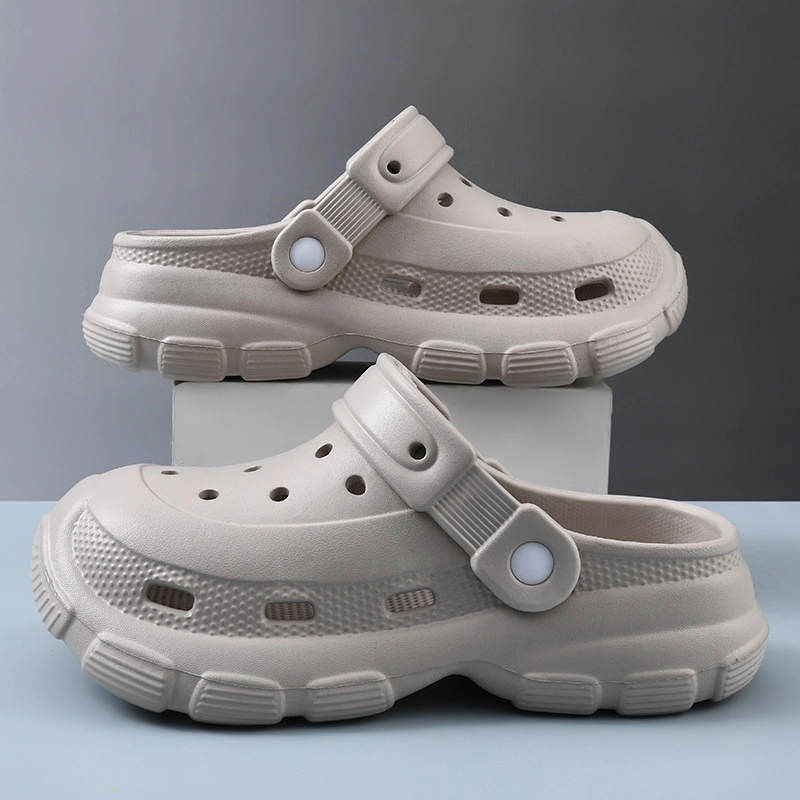
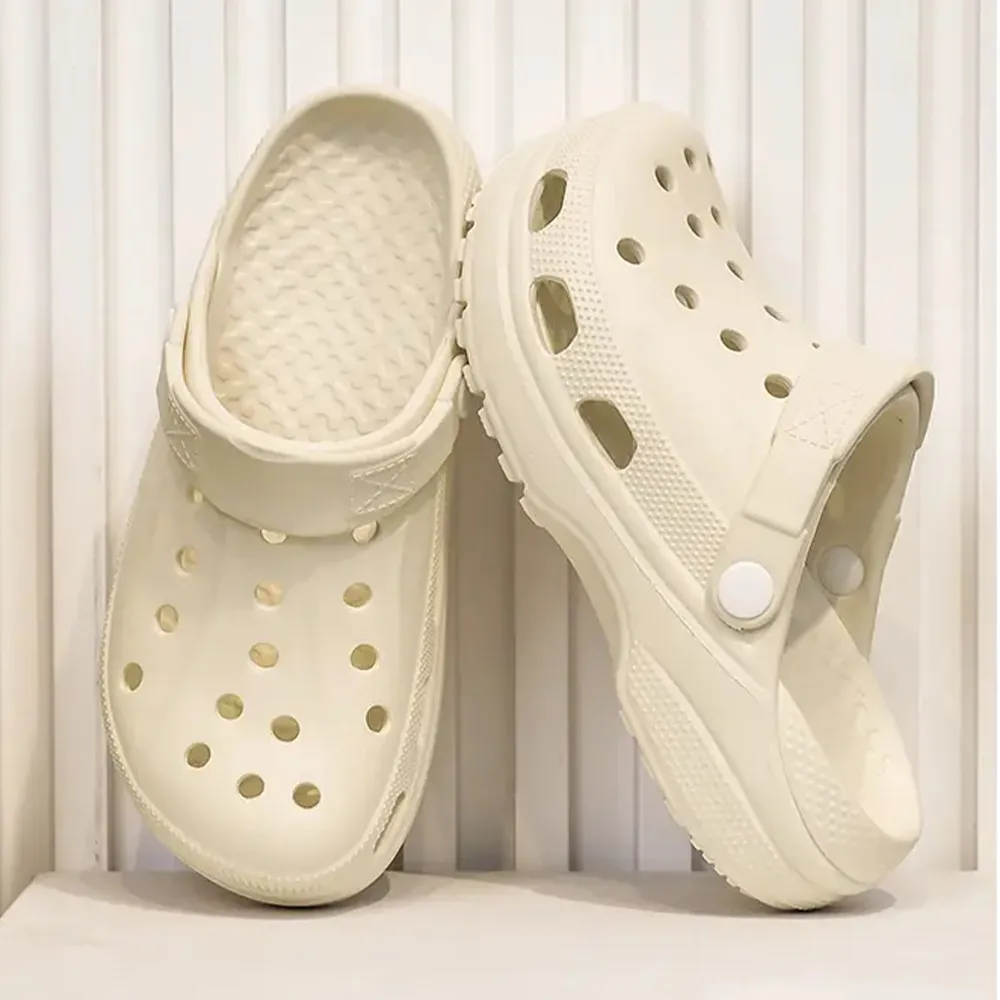
In the global market for casual and functional clog shoes, both Crocs shoes and EVA clogs have traditionally played significant roles. As a cross-border e-commerce seller, a regional brand owner, or a purchasing director in a large retail channel, when you come to bulk buying and/or OEM/ODM customization, you will most likely face a core question: What are the basic differences between Crocs Shoes and EVA Clogs? Which is best for your target market and business model?
They both resemble perforated shoes or casual clogs, but in terms of material, pricing structure, brand nature, customization options, and user pricing strategies, there’s a vast difference. For B2B buyers, these distinctions have an immediate effect on how the products are marketed, the profit margins associated with them, and the efficiency of the supply chain. In this context, this article will systematically compare the differences between Crocs shoes and EVA clogs from the perspective of material and structure, production and cost, customization and ODM, market and channel suitability, and long-term supply chain value, to provide more reference for the wholesale buyers and brand holders.
Material and Structural Differences Between Crocs Shoes and EVA Clogs
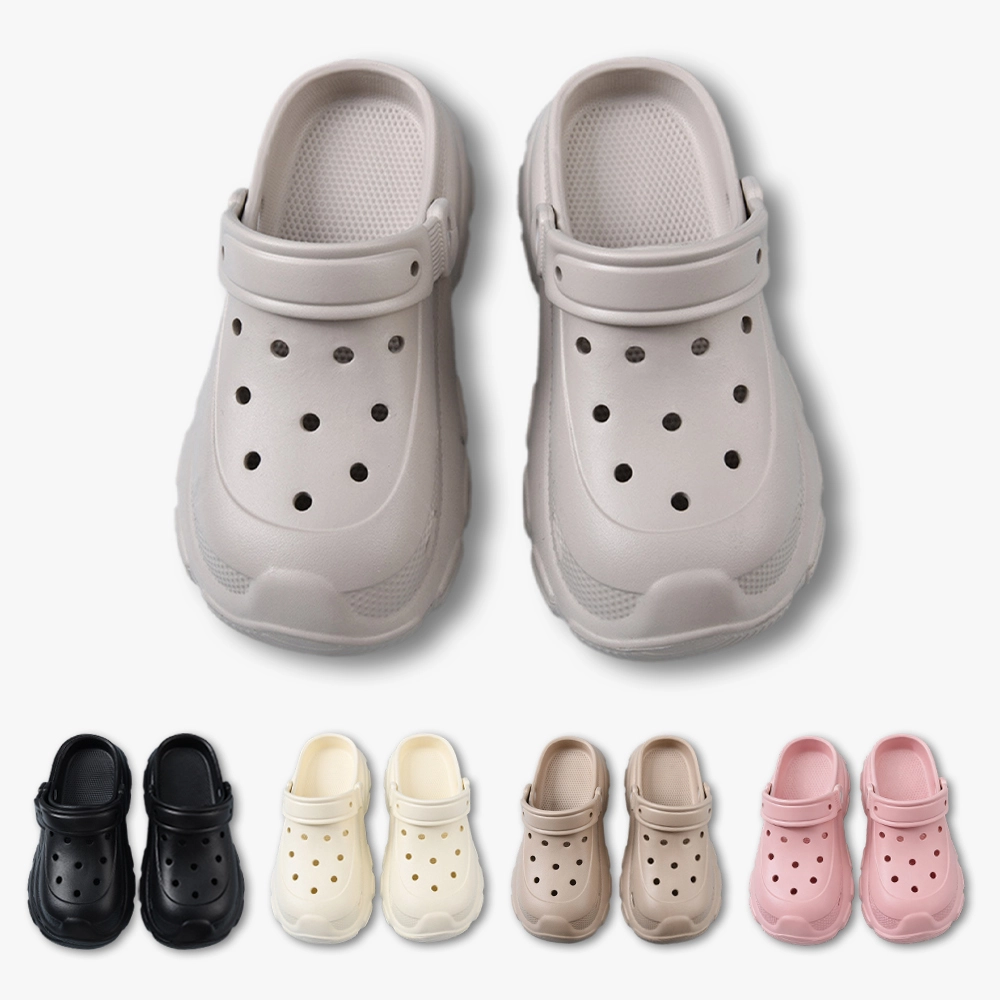
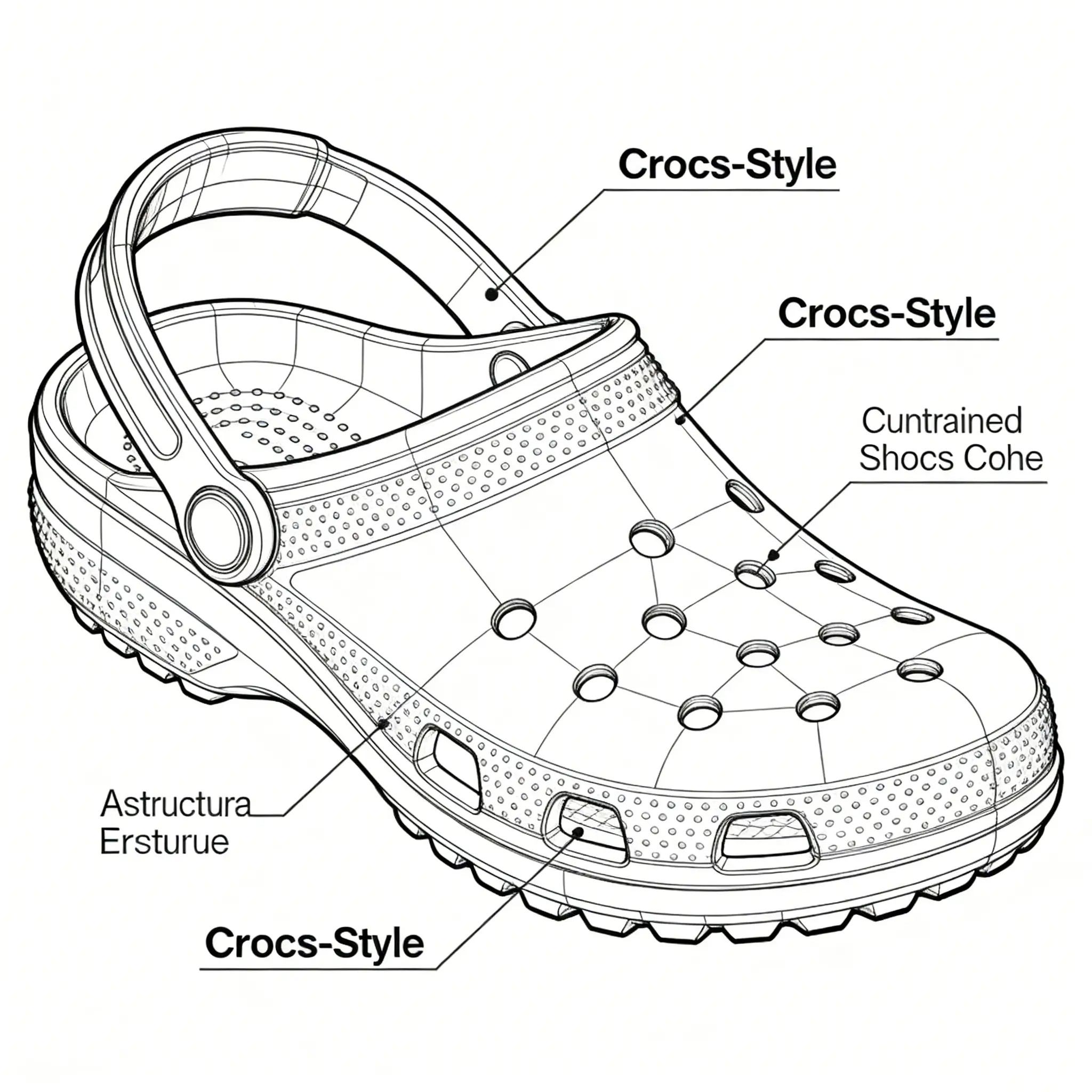
From a material perspective, Crocs Shoes typically use a proprietary modified resin (such as Croslite™-like materials), emphasizing lightweight design, softness, and resilience. These materials offer excellent comfort and long-term wear stability, making them ideal for market positioning that emphasizes “brand experience” and “comfort technology.” However, for B2B buyers, these materials often mean higher raw material costs and stricter production process requirements.
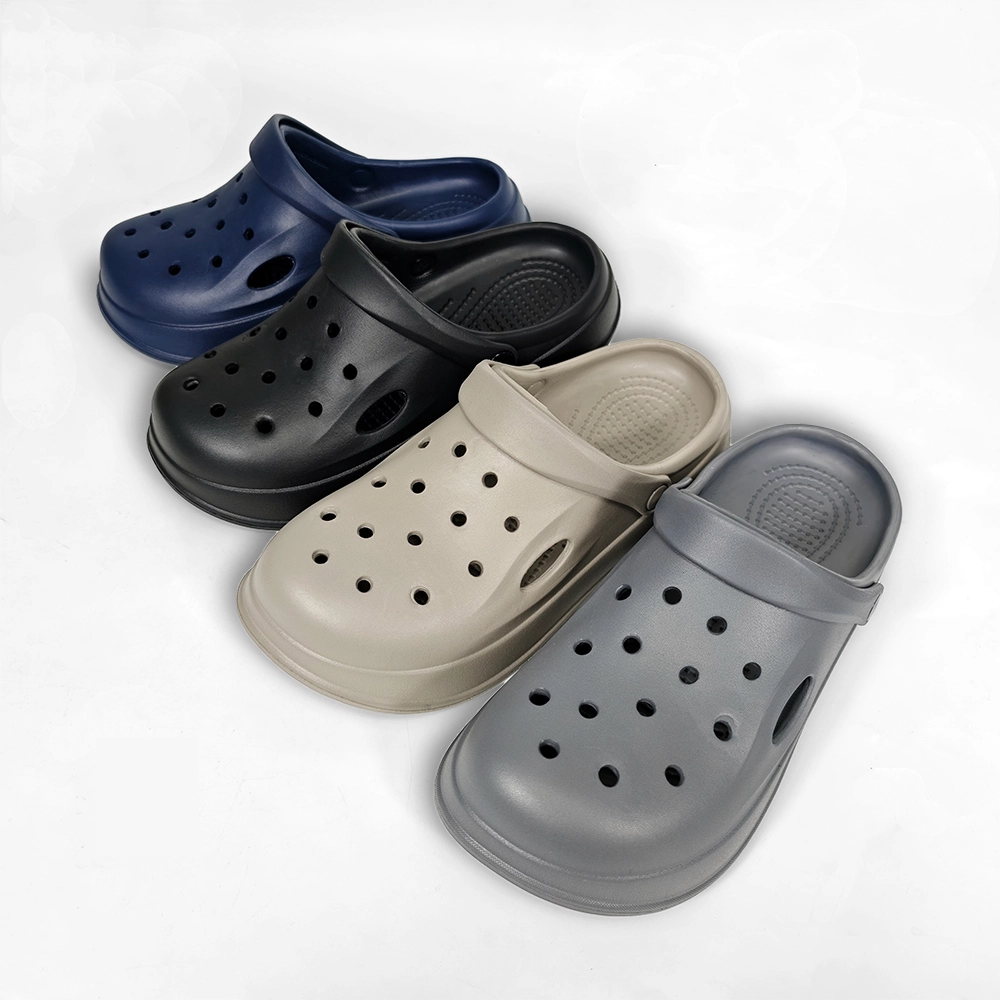
In contrast, EVA Clogs primarily use EVA (ethylene-vinyl acetate copolymer) as the core material, offering good waterproofing, cushioning, and processing stability. The advantage of EVA material lies in its controllability: by adjusting the foaming ratio, hardness, and density, manufacturers can precisely match different market needs, such as harder outdoor garden shoes or softer indoor slippers. This makes EVA Clogs more flexible in OEM/ODM projects.
In terms of structural design, Crocs Shoes typically emphasize a one-piece molded design and brand identification elements, while EVA Clogs are more suitable for differentiated development in sole thickness, toe shape, and heel strap structure. For wholesale buyers hoping to build their own brand and avoid product homogenization, EVA clogs offer greater advantages in terms of structural adjustment possibilities.
Cost Structure and Price Differences in Bulk Purchasing
For B2B customers, cost is always a core decision-making factor. Crocs Shoes, backed by brand attributes, proprietary materials, and design patents, often have higher manufacturing costs and stricter MOQ requirements. This makes them more suitable for buyers with established channels who can afford higher unit costs, such as large chain retailers or authorized distribution systems.
EVA clogs, on the other hand, offer greater cost control in raw material procurement, mold development, and mass production. Taking the Chinese manufacturing system as an example, for EVA clogs of the same specifications, the unit cost in large-scale production is usually 20%–40% lower than that of comparable Crocs Shoes. This difference is particularly evident in cross-border e-commerce and wholesale markets, directly impacting the competitiveness of the final retail price.
Furthermore, in OEM/ODM projects, EVA clogs have more favorable mold development costs and shorter mold cycles, facilitating rapid market testing for brands. This cost and efficiency advantage is crucial for B2B customers who need frequent new product launches and rapid SKU iterations.
Customization Capabilities: Key Differences from an OEM/ODM Perspective
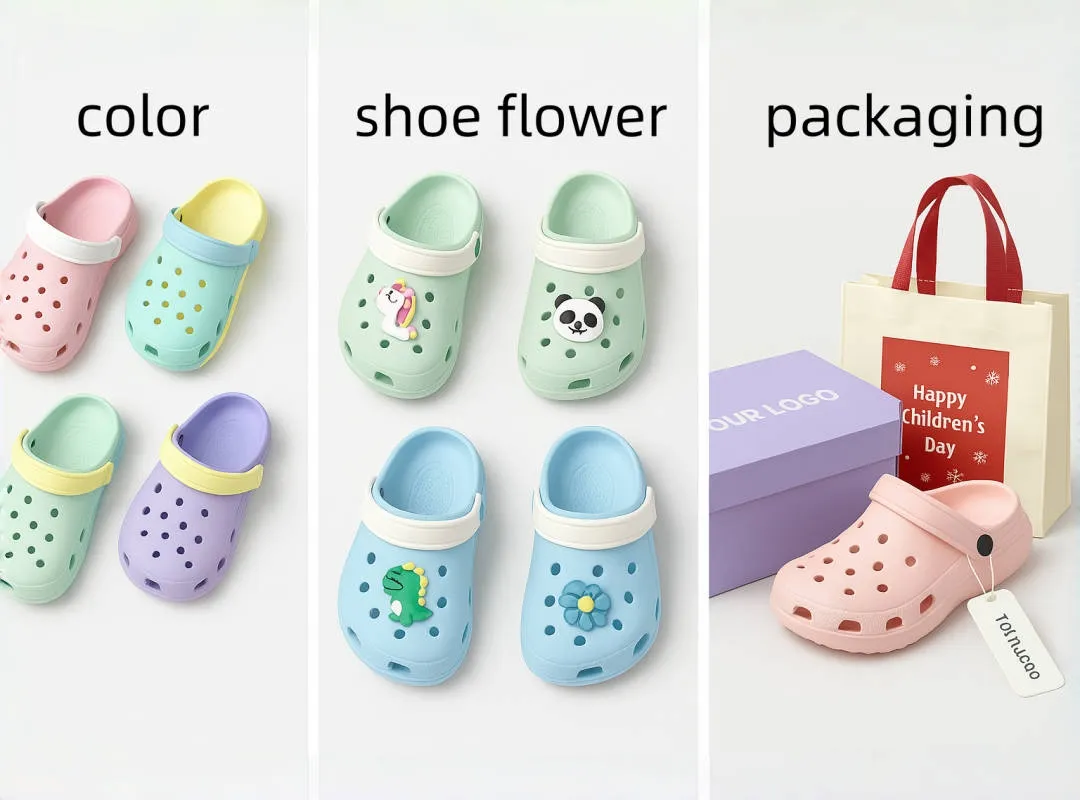
From an OEM/ODM perspective, Crocs Shoes lean towards a “finished product brand logic,” emphasizing brand uniformity and standardized design, with relatively limited customization options. Customization is usually limited to colors, size ratios, and a few decorative elements (such as Crocs charms), suitable for brand licensing or co-branding projects.
EVA clogs, however, are typically “manufacturing-friendly products.” Deep customization is possible in areas such as the layout of toe holes, sole thickness, heel strap structure, color combinations, and even surface texture. This flexibility is ideal for OEM/ODM customers to create differentiated product lines, especially in the men’s, women’s, and children’s slipper segments.
For example, for the European market, EVA clogs can be designed with enhanced anti-slip soles; for the Southeast Asian market, the focus can be on lightweight and breathable designs. This ability to customize according to market needs is a core reason why many B2B buyers choose EVA clogs.
Market Positioning and Sales Channel Suitability
At the market level, Crocs Shoes are more easily recognized by consumers as a “branded product,” suitable for the mid-to-high-end casual shoe market, especially with a stable consumer base in North America and Europe. For buyers who already possess brand premium capabilities, Crocs Shoes can quickly enhance product credibility.
EVA Clogs, on the other hand, offer greater flexibility in terms of channel suitability. From wholesale markets and supermarket private labels to cross-border e-commerce and gift channels, EVA Clogs can be flexibly deployed through different design and packaging strategies. This broad adaptability gives them greater application potential in the B2B market.
Especially in price-sensitive or emerging markets, EVA Clogs can more easily achieve rapid sales volume through reasonable pricing, thus helping brands establish a basic sales volume and channel coverage.
Long-Term Supply Chain and Brand Development Strategic Choices
From a long-term perspective, choosing between Crocs Shoes and EVA Clogs is not just a product choice, but also a supply chain strategic choice. Crocs Shoes lean towards a brand-driven model, while EVA Clogs lean towards a manufacturing and customization-driven model.
For B2B buyers who want to build their own brand in the long term and control the design and supply chain pace, EVA Clogs offer greater control and growth potential. By cooperating with professional manufacturers, brands can gradually build their own product matrix without being limited by a single brand framework.
Conclusion: How Should Bulk Buyers Choose?
Overall, there is no absolute superiority or inferiority between Crocs Shoes and EVA Clogs; the key lies in the business objectives of the B2B buyer. If you seek brand endorsement and recognition in mature markets, Crocs Shoes are a safe choice; if you are more concerned with cost control, rapid customization, and OEM/ODM flexibility, then EVA Clogs are undoubtedly more advantageous.
In today’s highly competitive slipper and casual shoe market, more and more wholesale buyers are shifting from simply “selling products” to “building brands + controlling the supply chain.” Understanding the differences between Crocs Shoes and EVA Clogs will directly impact your product strategy and long-term profit margins.
FAQ: Common Questions for Bulk Buyers
Are Crocs Shoes suitable for small-batch customization?
Generally not. Crocs Shoes are more suitable for large-scale, standardized procurement; small-batch customization is more costly.
Can EVA Clogs achieve a high-end market positioning?
Yes. Through material upgrades, structural optimization, and customized design, EVA clogs can also enter the mid-to-high-end market.
About Mingyi
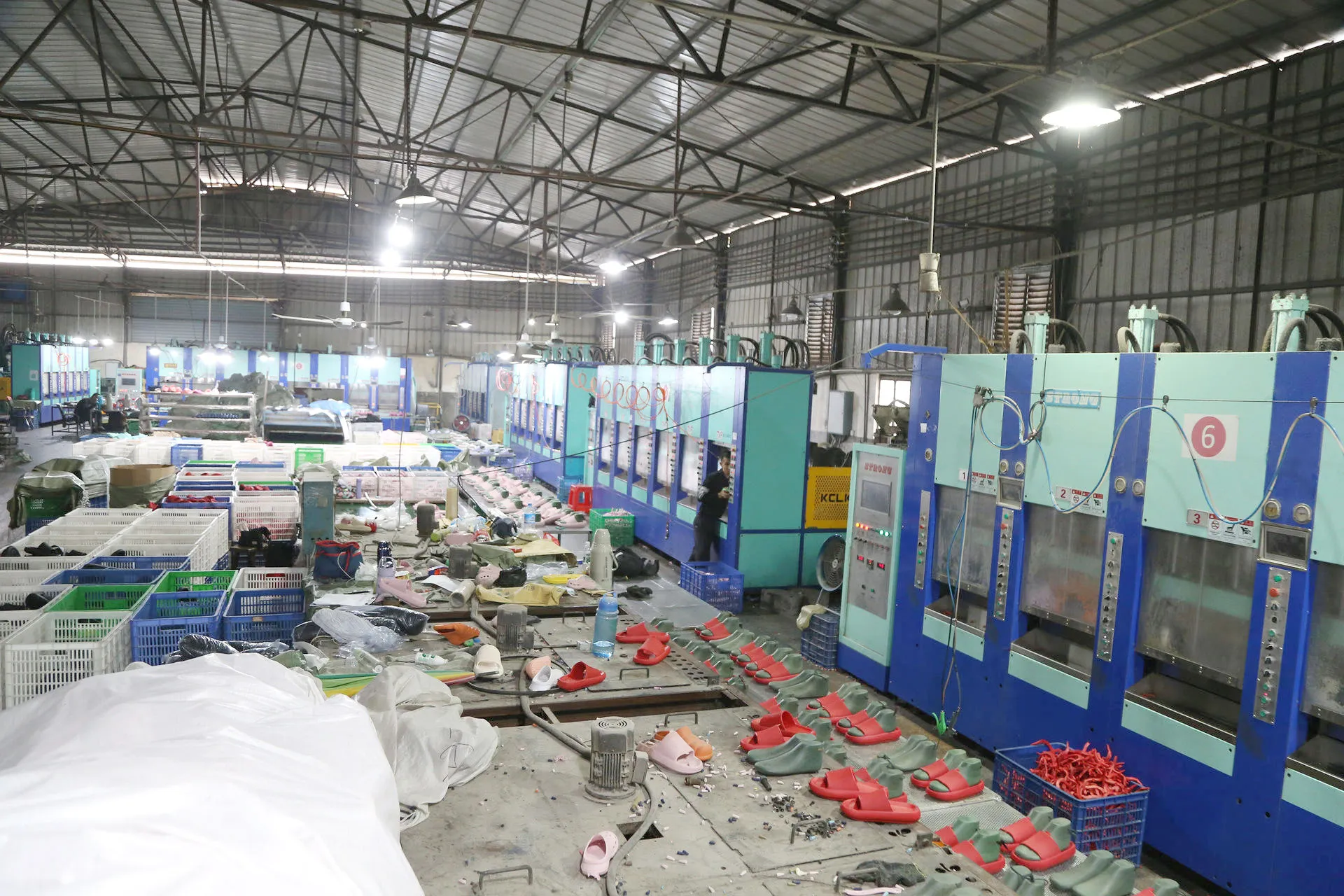
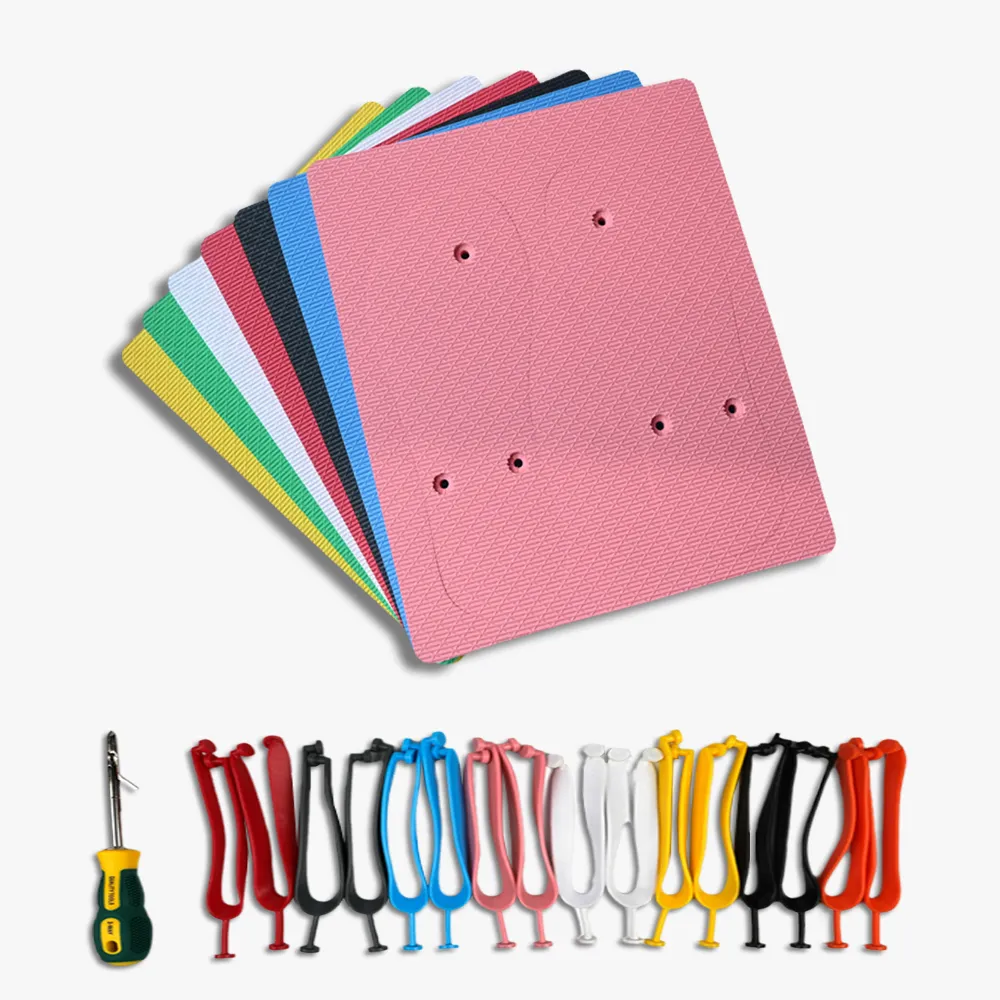
Jieyang Mingyi is a leading PVC/EVA slipper manufacturer in China, specializing in the research and manufacturing of PVC slippers, EVA slippers, Crocs shoes, EVA clogs, flip-flops, sandals, and slipper accessories. We provide global B2B clients with one-stop OEM/ODM services, from design and prototyping to mass delivery, supporting multi-style, multi-color, and multi-functional customization, helping brands efficiently launch products and quickly capture market share. Choosing Mingyi means choosing a stable, flexible, and professional slipper supply chain partner.