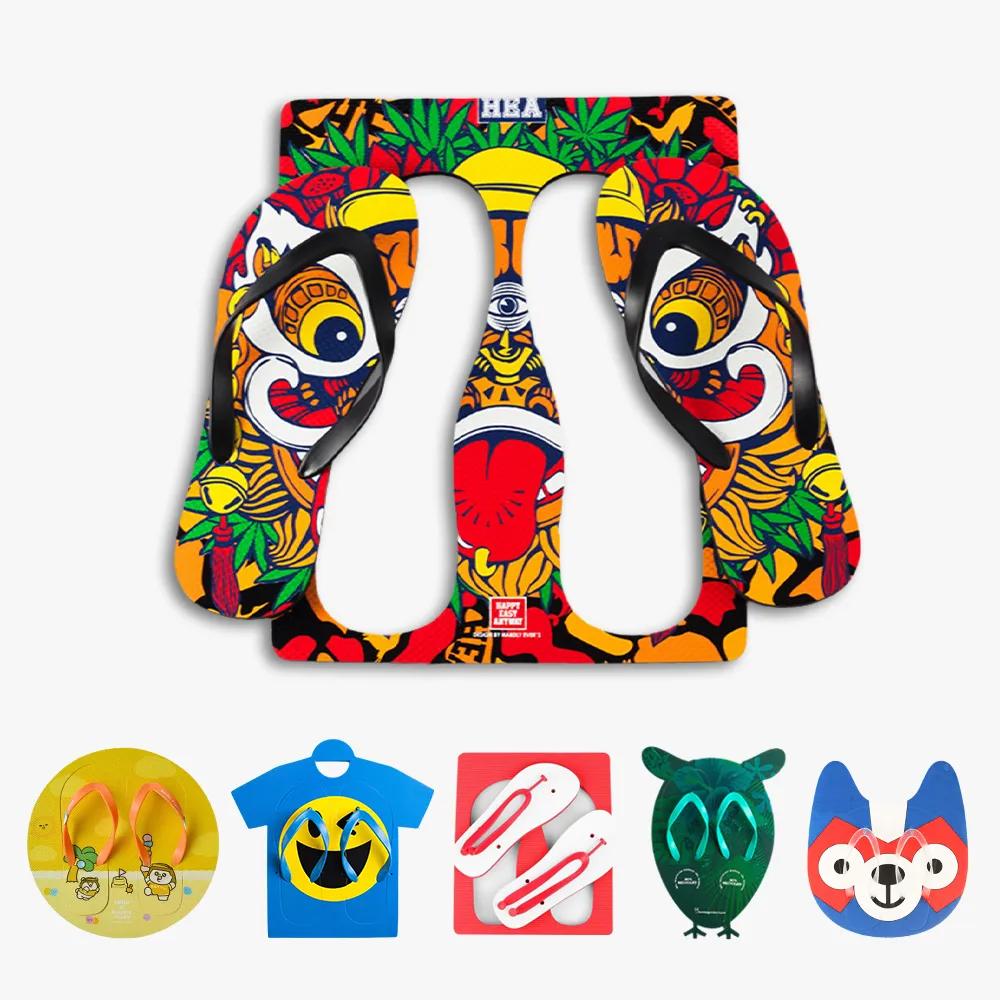
By Jame, Product Manager, Mapper Footwear | Last updated: October 2026
If you’re still deciding between customized flip flops and a fashion sandal line, the real difference isn’t which one looks more premium — it’s how much design room you get, how much a misprint costs you, and how many components you’re committing to before the order even ships. On all three counts, flip flops give you more room to move. The insole is close to a blank canvas, a misprinted sample is a cheap mistake instead of an expensive one, and a full-custom flip flop rarely needs more than two to five parts.
None of that makes a fashion sandal the wrong choice — it makes flip flops the lower-risk way to test a design, a market, or a brand direction before you scale into something more structurally complex. This guide breaks down why, so you can see where the advantage actually comes from instead of taking “flip flops are easier to customize” as a given.
Why Do Flip-Flops Give You More Room to Test a New Market?
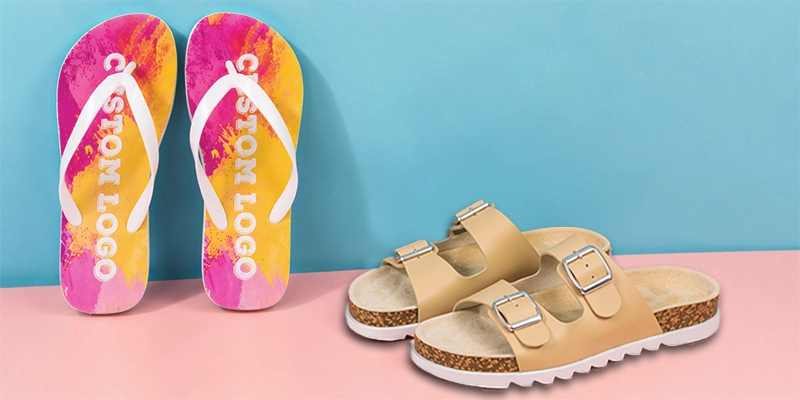
A 20-pair light-custom order is a market test, not a commitment. When you’re not sure whether a new print design, a new logo placement, or a new retail channel is going to work, the size of your first order matters more than the unit price. Mapper runs customized flip flops on light-custom orders starting at 20 pairs, which means you can validate a design direction with real buyers before you decide whether it’s worth a 500-pair full-custom OEM run. That’s a meaningfully different risk profile than committing to a sandal line where the tooling and structural complexity push the practical starting point higher.
Our guide on small batch vs. bulk slipper ordering walks through how MOQ and order size shape per-unit pricing if you want the full breakdown. If the goal is “let’s see if this sells” rather than “we know this sells, now scale it,” flip flops are built for that first step.
Why Does a Flip-Flop Give You More Design Space Than a Sandal?
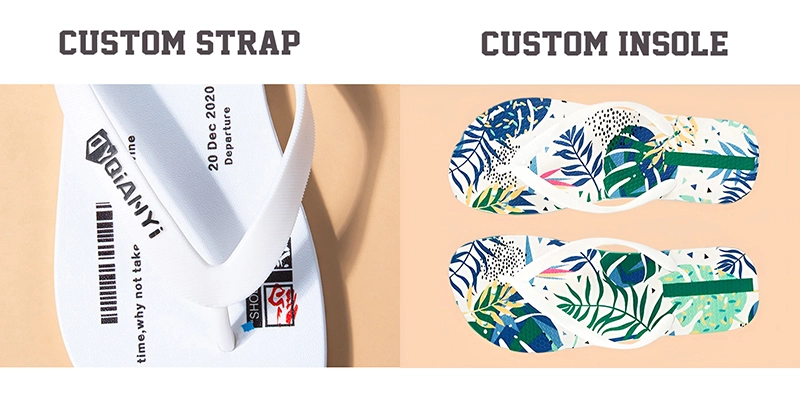
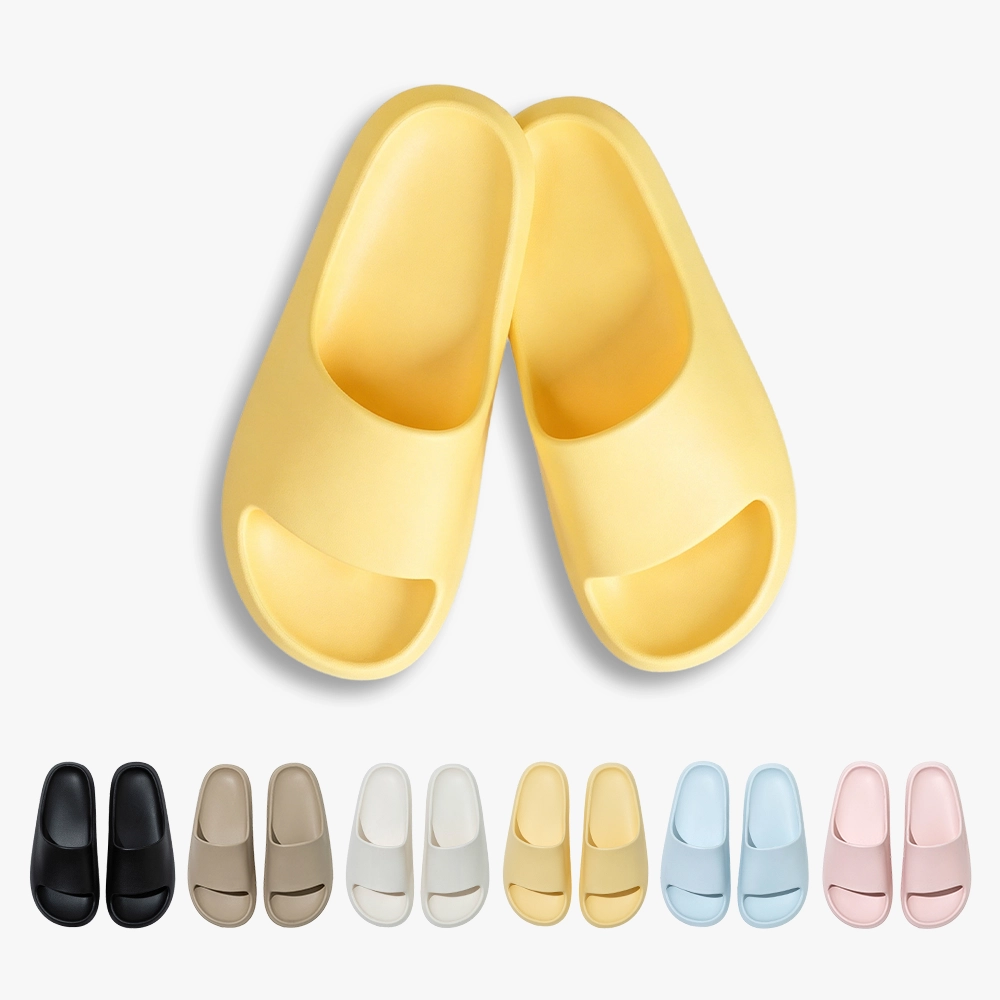
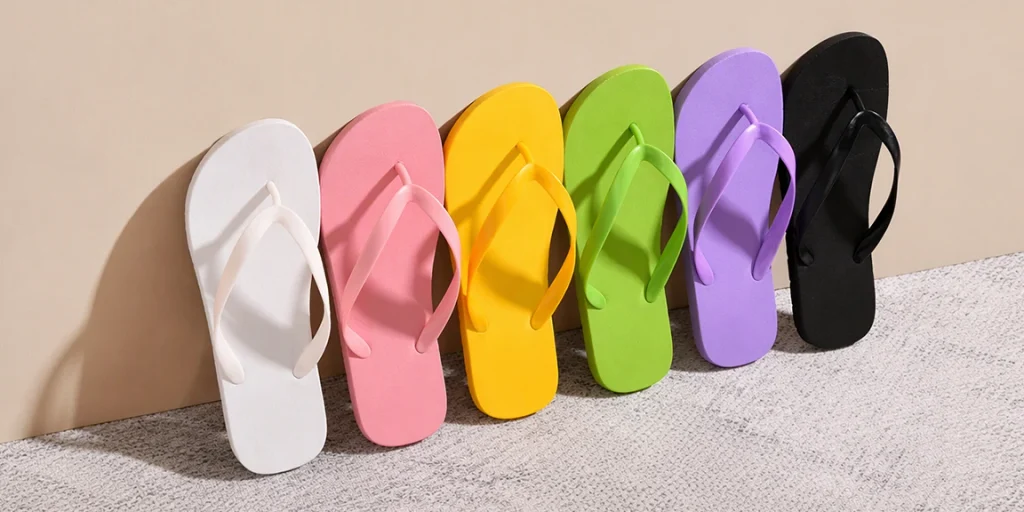
The flip-flop insole is close to a blank canvas — there’s almost no structural shape fighting against whatever design you want to put on it. You can run a full graphic across the footbed, emboss a logo into the outsole so it leaves a brand imprint in the sand with every step, and add a small mark on the strap itself. A sandal’s upper is a different starting point: straps, buckles, and heel coverage all take up surface area and follow a fixed shape, so a design has to work around that structure rather than sit on an open surface. That’s not a flaw in sandal design — it’s just a tighter canvas, because the shape is doing more functional work.
The other side of this is tolerance for mistakes. A misprinted flip-flop sample is a low-cost loss — you remake it and move on. Sandals typically run 150%-200% higher unit cost than flip flops, so every customization choice on a sandal carries more financial weight, and that’s exactly why sandal sampling tends to take longer: nobody wants to greenlight a full color or logo change on a higher-cost unit without being more certain it’s right the first time. If you’re still testing which direction a design should go, that lower cost of being wrong is a real advantage, not just a price difference.
We cover how this plays out across our four flip-flop logo printing methods in more detail in our printing method comparison, including which methods make the most sense for a design you’re still iterating on.
How Does Component Count Affect Your Customization Cost?
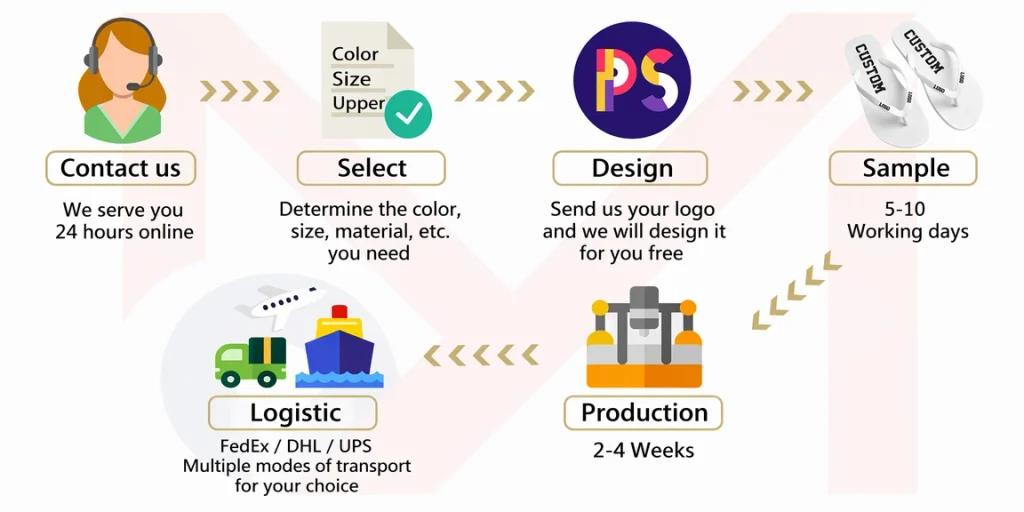
This splits into two different answers depending on how deep the customization goes, and it’s worth being precise about that instead of defaulting to “customized flip flops are just cheaper.”
For light customization — a logo, a color match, a basic print — the process and the number of steps for flip flops and fashion sandals are actually close. There’s no dramatic gap here, so if your order is a light-custom run, don’t expect component count to be the deciding factor.
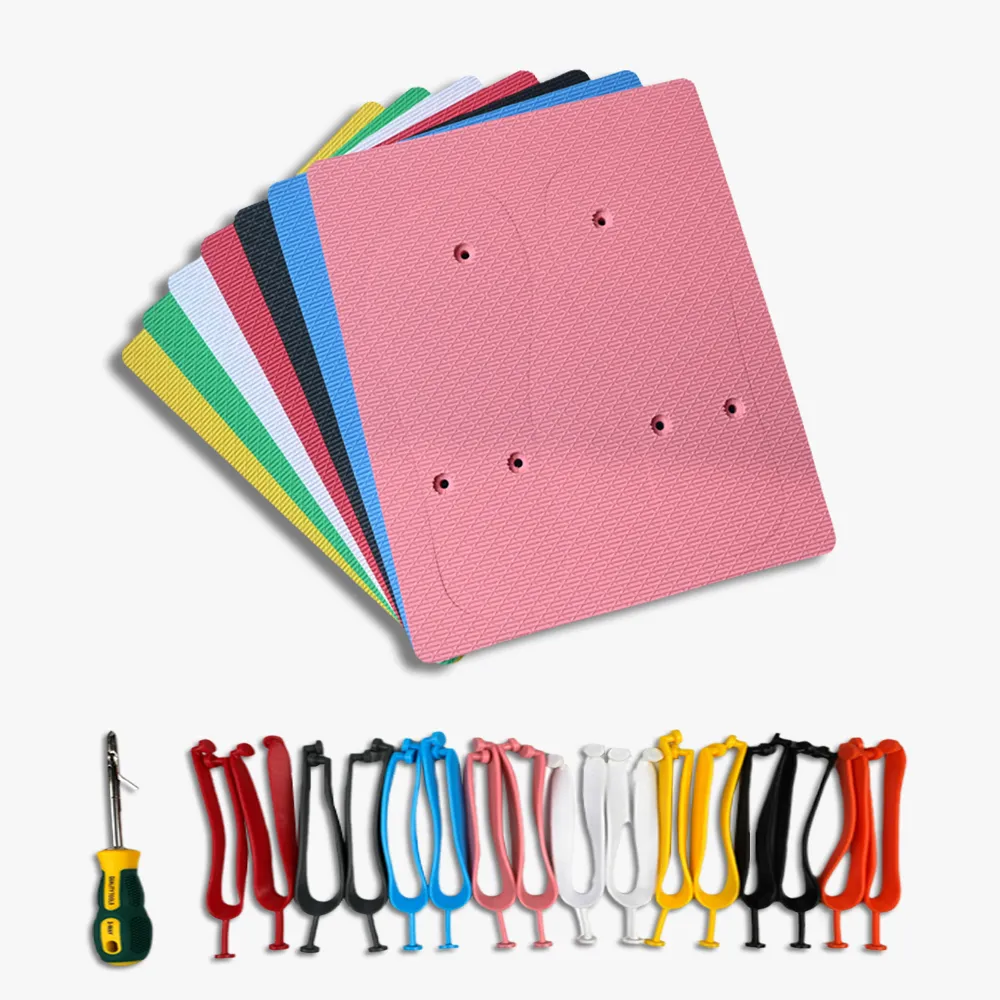
For full customization, the gap opens up. A fully customized flip flop, even a complex one, rarely needs more than two to five components, and some EVA designs mold the strap and sole as a single piece with no separate anchor point at all. A fully custom fashion sandal carries more structural parts by nature — straps, buckles, footbed layers, sometimes a midsole — and that added complexity is a direct reason sandal MOQs for full-custom work tend to sit higher than flip-flop MOQs. If you want the full walkthrough of what a light-custom versus full-custom order actually involves step by step, our guide on how to customize slippers breaks down the process end to end.
When Does a Flip-Flop Make the Smarter First Order?
Run through these before you commit to either style:
- You’re testing a new print or logo design and want to see real feedback before scaling it onto a higher-cost product.
- You’re entering a new market or retail channel and don’t yet have the order history to justify a bigger structural commitment.
- You want full customization without a high MOQ — a simpler component count gets you there faster than a structurally complex sandal would.
- A sample mistake needs to be cheap, not expensive — useful when you’re still iterating on artwork or color.
If three or more of these match your situation, customized flip flops are the lower-risk way to start. If none of them apply — you already know your design, your market, and you need the structural support a sandal provides — that’s a different conversation, and one a fashion sandal supplier is better positioned to have with you.
Final Thoughts
Customized flip flops aren’t a cheaper substitute for a fashion sandal — they’re a different tool for a different stage of the decision. More design space, lower cost of a mistake, and fewer components to commit to make them the easier way to test a direction before you scale. Use that advantage when you’re still deciding, not as a reason to avoid sandals altogether.
Ready to Order Customized Flip Flops for Your Brand?
Getting the design right matters more than getting it fast — but with flip flops, you don’t have to choose between the two.
- Visit mappershoe.com — browse our customized flip flops catalog and see what a light-custom order looks like in practice.
- Send your inquiry with your design idea, whether it’s a footbed graphic, an embossed outsole logo, or a strap mark. We respond within 1 business day.
- Request samples — light-custom flip-flop samples ship within 5-7 business days.
Follow us on Instagram, TikTok, and YouTube to see our production floor and customization work firsthand.
For urgent inquiries: WhatsApp +86 183 1221 8218
About the Author: Jame is a Product Manager at Mapper Footwear, a flip-flop and slipper manufacturer based in Jieyang, Guangdong, China, with 60+ staff, 10,000 pairs/day capacity, and CA65, EU REACH, and EU RoHS certifications. Mapper supports both light customization (20-pair MOQ) and full custom OEM (500-pair MOQ) across EVA, PVC, and rubber product lines.
Follow Mapper Footwear: Instagram · TikTok · YouTube · Facebook · WhatsApp +86 183 1221 8218 · mappershoe.com
More from Jame: