By Jame, Product Manager, Mapper Footwear | Last updated: September 2026
Most flip-flop straps failures don’t come from one bad batch of material — they come from decisions made months earlier, at the sourcing stage, before a single pair ever gets molded. After years of building flip flops for wholesale buyers, I can tell you the strap almost never fails because EVA or PVC is inherently weak. It fails because someone upstream cut the strap thinner than the design called for to protect margin on a bulk quote, picked a compound that looks fine on a spec sheet but degrades under sun and saltwater, or built a strap geometry sized for a narrower foot than the market it’s actually shipping into.
None of that shows up in a sample review. It shows up three months into retail, as a return rate. If you’re sourcing flip flops at volume, the real question isn’t “what material should I use” — it’s “what should I be asking my supplier before I place a bulk order.” That’s what this guide covers.
Why Do Flip-Flop Straps Actually Break?
In our experience, strap failure traces back to one of three upstream decisions, not one random material defect. None of these are exotic problems — they’re common enough across the industry that any experienced buyer should know to check for them before committing to a bulk order.
The first is cost-driven strap thinning. The most common cause we see industry-wide is strap thickness getting quietly reduced to protect margin on a bulk quote. A strap that reads fine in a product photo can be noticeably thinner than what the original approved sample used, and that difference doesn’t show up in a casual inspection — it shows up as tearing at the toe-post anchor point after a few weeks of daily wear.
The second is choosing a compound for hardness and color match alone, without weighing how it holds up under real-world weathering. Flip flops get worn on beaches, by pools, in hot climates — exactly the conditions that make certain EVA and rubber blends brittle over time. A strap that feels flexible in a climate-controlled showroom can turn stiff and crack-prone after repeated UV exposure and water contact, and that’s a compound formulation issue, not a random defect.
The third gets overlooked more than the first two: strap geometry designed around the wrong foot profile. Toe-post spacing and thong width are often set around one regional foot pattern and then sold into a market with a different average foot width. Western feet, on average, tend to have a broader forefoot than the pattern many factories default to. Sell that same narrow pattern into a Western market and the strap sits under constant, low-level stress across the forefoot with every step — that’s not the strap failing on its own, that’s a strap under chronic tension it was never built for, splitting sooner than it should.
How Are Flip-Flop Straps Attached Without Glue?
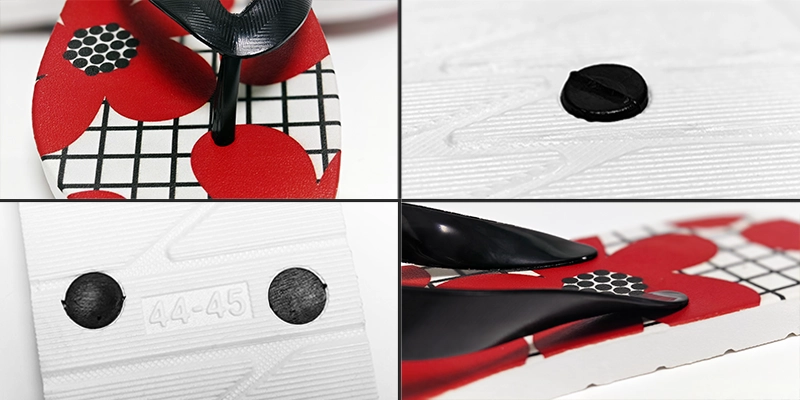
We ruled out glue-bonded straps at the design stage, and we’re not alone in that — it’s an industry-wide default, not a Mapper-specific preference. Adhesive bonds on a flip-flop strap tend to fail in three predictable ways: the bond detaches under repeated flex, the bond strength itself is inconsistent from pair to pair, and excess adhesive bleeds out around the anchor point, which looks bad and weakens the joint further. None of that is worth the assembly-speed tradeoff.
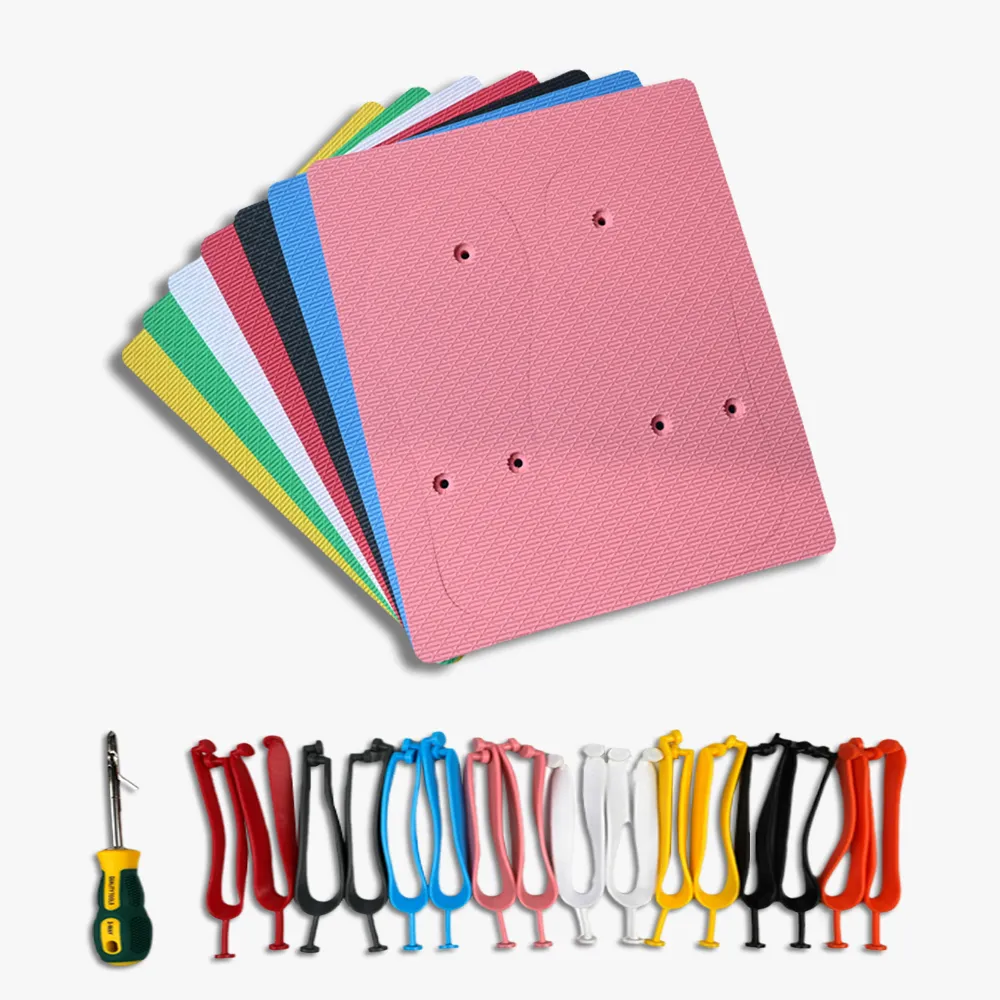
In practice, we build straps one of two ways. The first, and still the industry default across both PVC and EVA flip flops, is a post-and-plug anchor: the strap end is fed through a molded hole in the sole and locked in place with a plug, no glue involved. It’s reliable and it’s been the standard construction for decades.
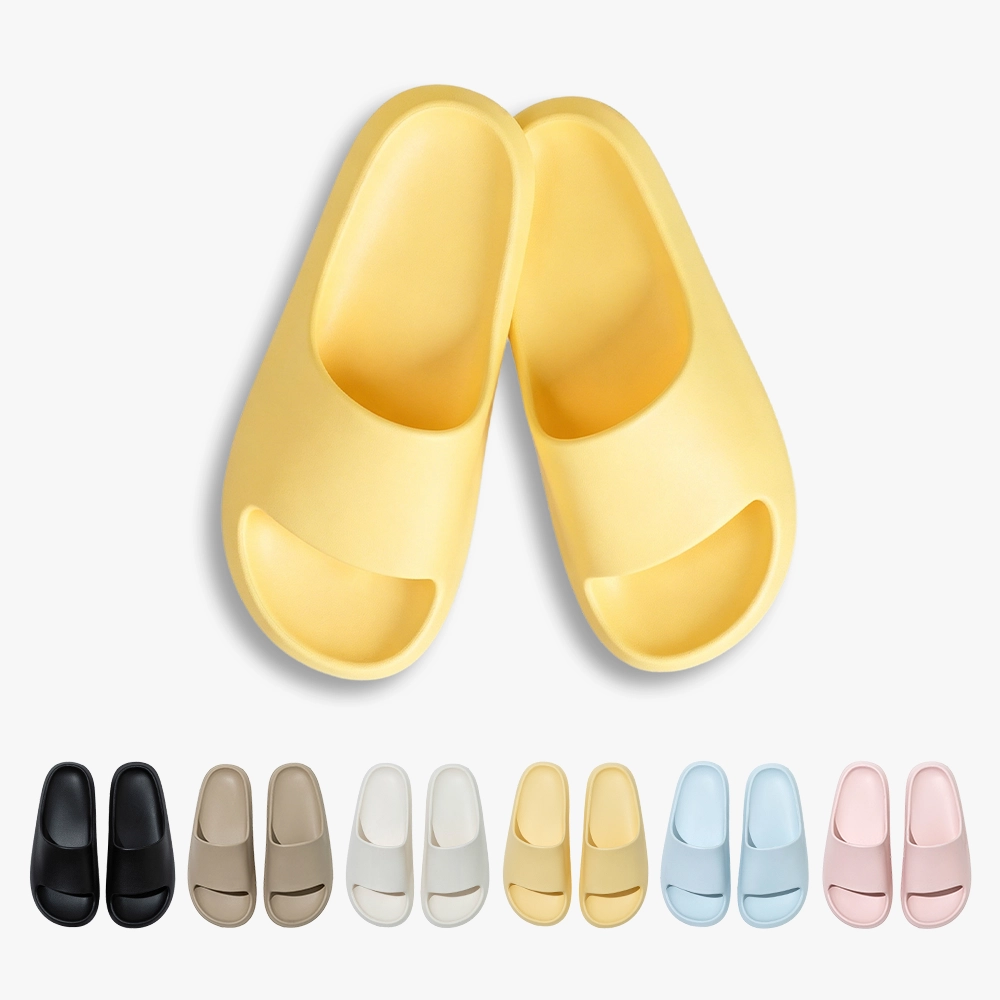
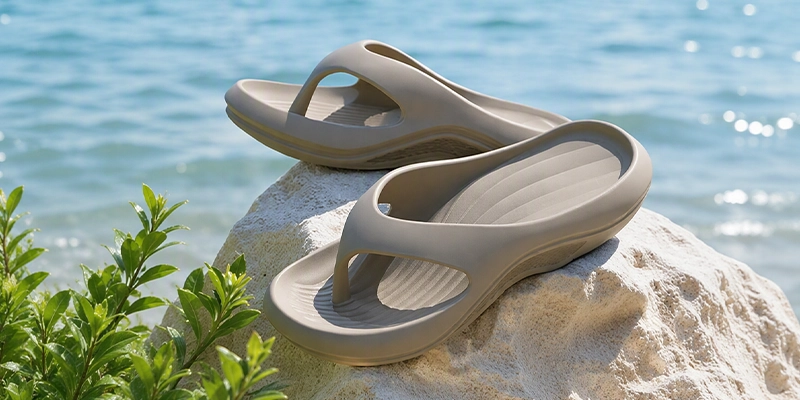
The second, which has picked up momentum on EVA flip flops in the past few years, is a one-piece molded strap — the strap and the sole are the same piece of EVA, formed together in a single mold shot, with no hole and no separate anchor point at all. Removing the anchor point removes the single most common place a strap fails, which is exactly why we’ve been shifting more of our EVA flip-flop lines toward it. It’s not the default for PVC yet, mainly because the tooling and material behavior are different — post-and-plug remains the more practical choice there for now.
What Separates a Durable Strap From One That Fails Early?
Construction method only gets you halfway — the compound itself still has to hold up. A flip-flop strap that survives daily wear for years and one that splits within a season are often built from the same base material family, formulated differently. We’ve written a full breakdown of how EVA, PVC, and rubber compare on flexibility, weather resistance, and long-term durability in our flip-flop material guide, so we won’t repeat that comparison here.
The short version relevant to strap durability specifically: EVA holds up well against water and stays lighter, but formulation quality varies widely between suppliers; PVC is more consistent under sun exposure but adds weight; rubber outperforms both on long-term flex fatigue but costs more. Which one is right for your flip-flop strap depends on your target climate and price point, not on which material is “best” in the abstract.
How Should Buyers Verify Strap Durability Before Bulk Ordering?
Don’t take a supplier’s word for durability — ask for the test standard they build to. Attachment strength for flip-flop straps is commonly evaluated against SATRA TM120, an industry-standard test for strap and eyelet attachment strength that shows up in retailer quality specs across the footwear trade. It’s worth asking any supplier directly whether they test flip-flop strap attachment to TM120 or an equivalent standard, and whether they can share pull-strength data for your specific strap design — not just a generic factory certificate that doesn’t reference the actual construction you’re ordering.
What Should Be on Your Supplier Vetting Checklist?
Before you commit to a bulk flip-flop order, four questions about the strap will tell you more than any sample review will:
- What’s the actual strap thickness in millimeters, in writing — not “same as the sample,” which leaves room for the quiet thinning that causes most early failures.
- Which construction method are they using, and why — post-and-plug or molded-in, and whether that choice fits your target market’s climate and price point.
- Can they share attachment-strength test data referenced to TM120 or an equivalent — a supplier who tracks this will have the numbers ready; one who doesn’t test for it usually won’t.
- Has the strap geometry been reviewed against your target market’s foot profile, or is it a stock pattern being sold as-is into a market it wasn’t built for.
A supplier who can answer all four without hesitation is one worth building a bulk order with. If you want a broader walkthrough of what else to check before committing, our guide on choosing a reliable slipper supplier in China covers the rest of the vetting process, and our breakdown of what happens after you inquire walks through what a serious supplier’s sampling and lead-time process should actually look like.
Final Thoughts
Flip-flop straps rarely fail on a bulk order for a mysterious reason once you know where to look — it’s almost always one of the four questions above, answered incorrectly or not asked at all. Ask them before you place the order, not after the return rate tells you the answer.
Ready to Vet a Flip-Flop Supplier Before Your Next Bulk Order?
Strap failure is preventable, but only if you ask the right questions before the deposit is paid, not after the first shipment lands.
- Visit mappershoe.com — browse our flip-flop lines and OEM capability, including construction and attachment options.
- Send your inquiry with your target strap design, construction preference (post-and-plug or molded-in), and whether you need TM120 attachment-strength data. We respond within 1 business day.
- Request samples — flip-flop samples on existing styles are available within 5-7 business days.
Follow us on Instagram, TikTok, and YouTube to see our production floor and construction methods firsthand. For urgent inquiries: WhatsApp +86 183 1221 8218
About the Author: Jame is a Product Manager at Mapper Footwear, a flip-flop and slipper manufacturer based in Jieyang, Guangdong, China, with 60+ staff, 10,000 pairs/day capacity, and CA65, EU REACH, and EU RoHS certifications. Mapper supports both light customization (20-pair MOQ) and full custom OEM (500-pair MOQ) across EVA, PVC, and rubber product lines.
Follow Mapper Footwear: Instagram · TikTok · YouTube · Facebook · WhatsApp +86 183 1221 8218 · mappershoe.com
More from Jame:
Wholesale Slippers from China: Complete Buyer’s Guide
PVC vs. EVA: Which Slipper Material Is Right for Your Market Needs?