By Jame He, Product Manager, Mapper Footwear | Last updated: September 2026
If you’re sourcing custom Crocs style clogs for a brand, club, or small storefront, the branding method you pick decides your cost, your lead time, and how small a batch you can actually order. Logo printing starts at 1 pair with a 7-9 day sample turn. Full-print work needs 1,000 pairs minimum and a longer sample cycle. Custom charms sit in between at 500 pairs but ship faster once approved. There’s no single “best” option — there’s the option that matches your order size and how much visual impact you need on the shoe.
I run production and custom development at Mapper Footwear, and roughly 80% of what leaves our factory now carries some form of customization — branded wholesale orders, spa and hotel programs, independent site owners, and small ecommerce sellers testing a design before committing to volume. This guide breaks down what each branding method actually costs, how long it takes, and which type of buyer each one fits — so you’re not guessing at MOQ tiers or getting surprised by a second round of fees mid-project.
What Are the Three Main Custom Crocs Branding Methods?
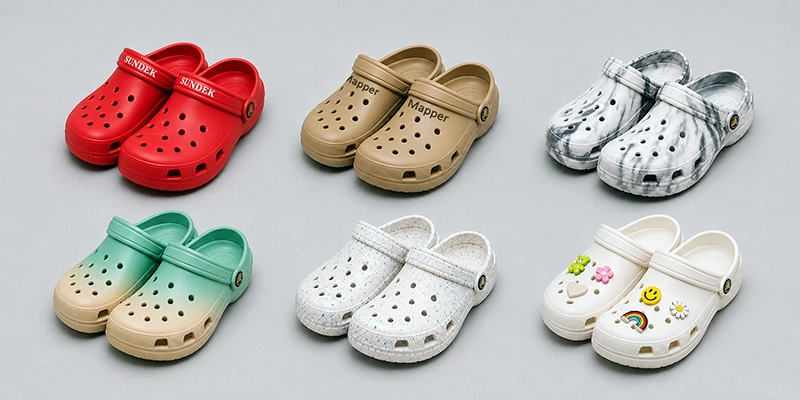
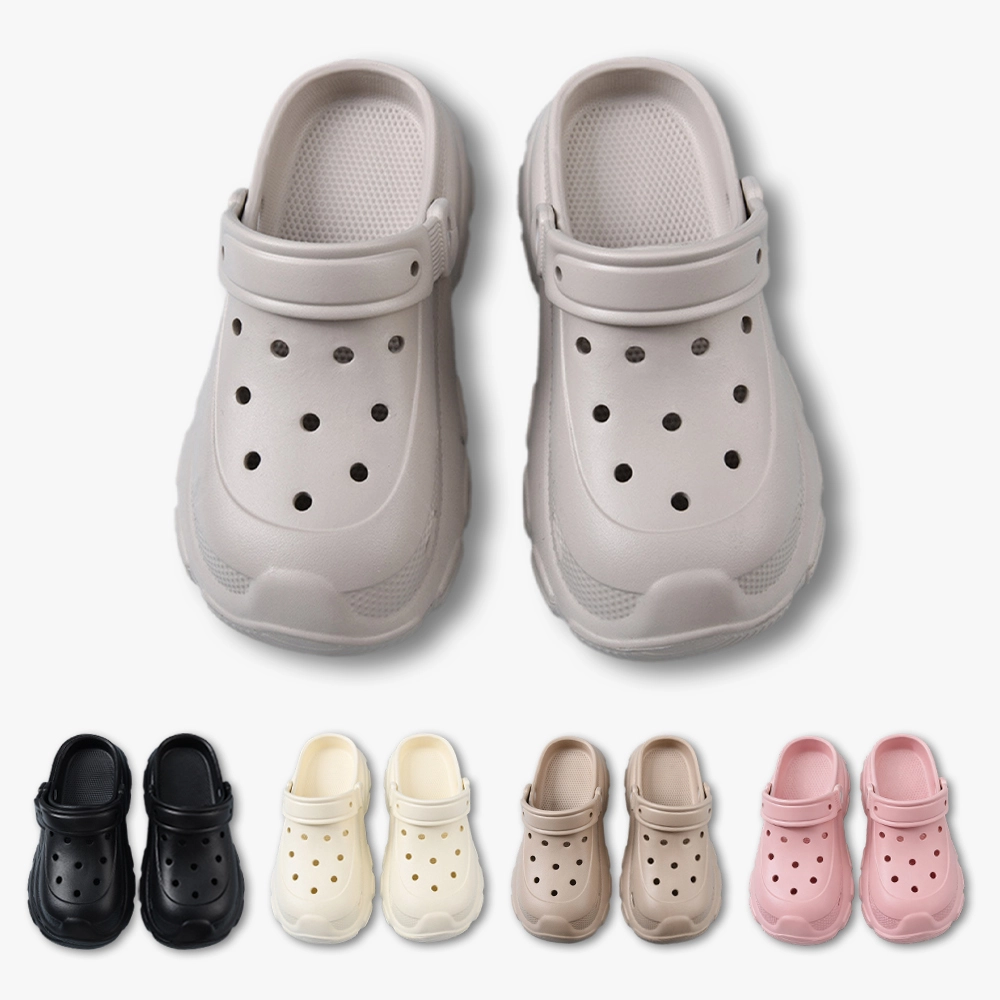
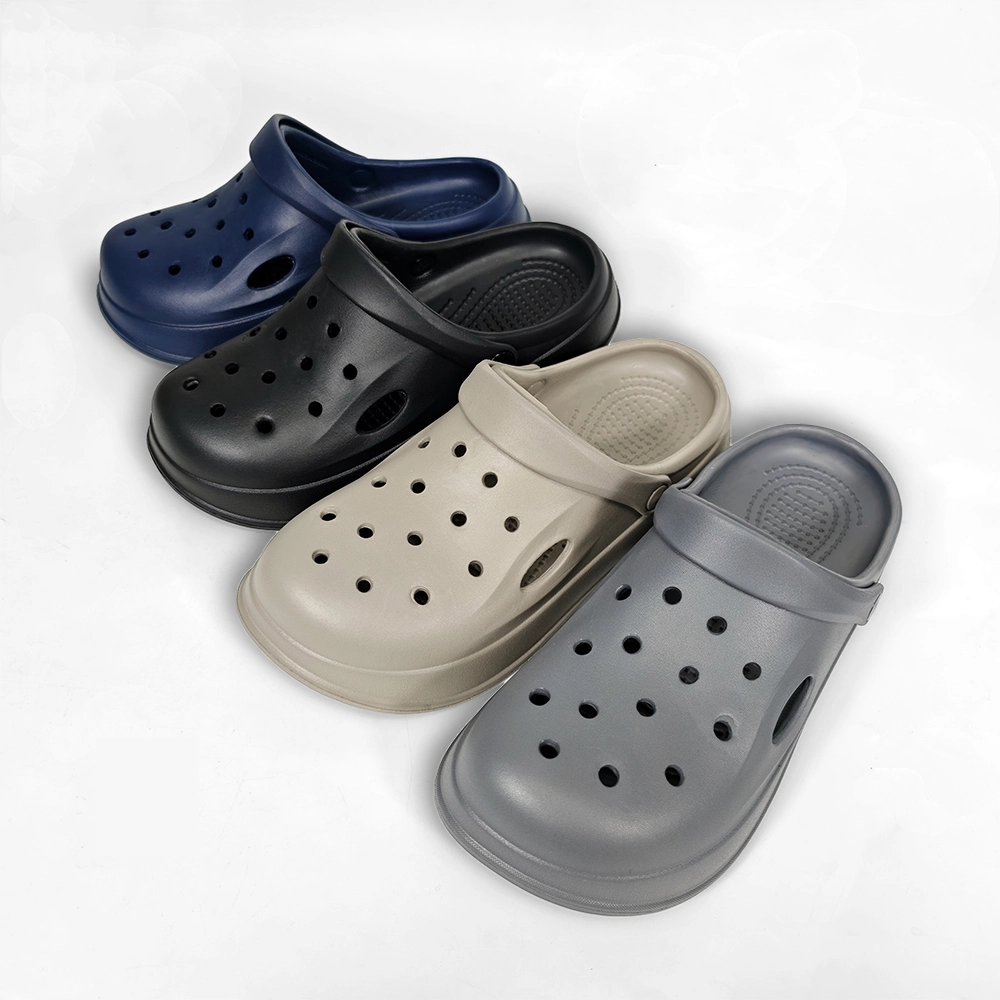
Digital logo printing, full-surface (all-over) printing, and custom charms or decorative pins are the three custom Crocs branding routes we run most often, and each one serves a different order size. Digital printing places a logo or graphic on a specific zone of the upper — it’s the fastest way to get a brand mark on a custom Crocs clog without committing to volume. Full-print covers the entire visible surface with a pattern or design, which reads as a much stronger brand statement but requires more setup and a bigger commitment. Charms are small decorative attachments (similar to what people know from mainstream slide-brand accessory pegs) that snap into vent holes — no printing on the shoe itself required.
Most buyers who come to us already know they want a custom Crocs order but haven’t decided which of the three branding methods actually fits it. That decision usually comes down to three things: how many pairs you’re ordering, how much of the shoe you want covered, and how fast you need the first batch.
Digital printing and full-print both run on the same equipment and material process we use across our entire product range — custom Crocs clogs included, not just closed-upper slippers. If you want the deeper technical breakdown of how each printing method behaves on EVA and PVC uppers, our full comparison of six slipper printing methods covers the process side in more detail.
How Do MOQ, Sample Time, and Bulk Lead Time Compare Across the Three Methods?
Digital printing has the lowest barrier to entry at 1 pair minimum, while full-print requires 1,000 pairs and custom charms sit at 500 pairs — but charms actually ship faster in bulk than either printing method. Here’s the real breakdown from our production floor for a typical custom Crocs order:
| Branding Method | MOQ | Sample Lead Time | Bulk Lead Time |
|---|---|---|---|
| Digital Logo Printing | 1 pair | 7-9 business days | 20-30 business days |
| Full-Print (All-Over) | 1,000 pairs | 15-20 business days | 20-30 business days |
| Custom Charms | 500 pairs | 7 business days | 12-15 business days |
The pattern that surprises most first-time buyers: full-print isn’t just a bigger MOQ, it’s also a longer sample cycle — nearly triple what digital printing takes. That’s because full-print setup (color separation, plate alignment across the whole upper) takes more engineering time upfront than printing a logo in one zone. If you’re on a tight timeline and want to test market response before scaling, digital printing or charms will get you a sellable sample far sooner.
Custom charms deserve a second look here: once your design is approved, bulk production is actually the fastest of the three. There’s no printing step on the shoe itself — the charms are produced separately and attached at packing, which cuts a real chunk of time off the batch schedule.
How Much Does Custom Crocs Branding Actually Cost?
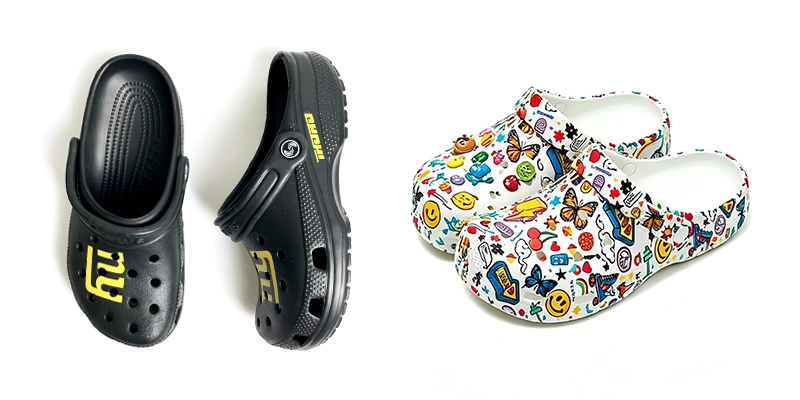
Digital printing and full-print run at a similar per-pair add-on cost, roughly $4 per pair depending on order volume — the real cost difference on a custom Crocs order shows up in the one-time setup fee, not the per-unit price. Digital printing carries about a $40 plate/setup fee. Full-print in a single color runs closer to $80 for setup, since it covers more surface area and needs more precise registration. Custom charms run a flat mold fee of roughly $150 for a set of 10 charm designs, with the per-unit cost varying by how complex the shape and color count is.
I want to be direct about something here: we can’t give you one flat “customization fee” that applies to every order, and any supplier who quotes you one number before seeing your actual logo is guessing. Cost moves with three variables — how many colors are in your design, how complex the logo shape is, and where on the shoe it goes. A single-color logo in one zone costs meaningfully less than a five-color gradient design that needs full-surface coverage. If you want an exact number, the fastest path is sending us your actual artwork rather than asking for a generic price list.
Why Do Customization Costs Sometimes Go Up Mid-Project?
The most common friction point isn’t the base cost — it’s when a customer’s design changes partway through and the production method has to change with it.
We’ve had cases where a buyer sends a simple single-color logo suited for a laser-etch style process for a custom Crocs order, we quote and begin sampling, and then the design gets revised to a multi-color version. That switch forces a move to digital printing, which comes with its own plate fee — separate from the one already paid for the etch setup. From the buyer’s side, it can feel like the fee “keeps growing” for no reason. From the production side, it’s simply that a different process was triggered by a different design, and each process has its own setup cost attached.
The fix is locking your final artwork — colors, placement, size — before sampling starts, not during it. If your design isn’t finalized, tell your supplier upfront that revisions are likely, so they can quote a process that has room to flex without triggering a full re-setup.
Which Branding Method Fits Which Type of Buyer?
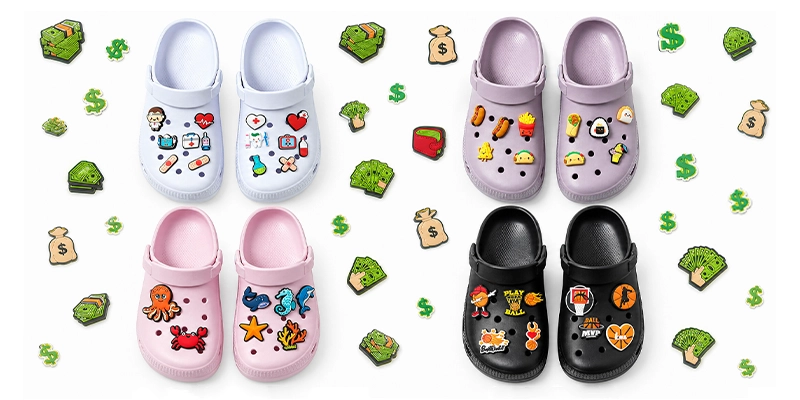
Digital printing suits buyers who need a compact, multi-color, or gradient logo and don’t want to commit to a large first order. Full-print suits buyers with an existing brand identity who want the shoe to carry a strong, unmistakable visual statement and have the volume to back it. Charms suit buyers who want a distinct look without altering the base shoe at all — and who may want to swap designs later without touching the mold. Whichever route you pick for your custom Crocs order, the decision should follow your order size, not the other way around.
If you’re running gradient artwork, a photo-style logo, or anything with more than two or three colors in a tight area, digital printing handles that detail better than the alternatives, and you can start at almost any order size. If your brand identity is built around a repeating pattern or full visual takeover of the shoe — something you’d see on a themed seasonal release or a brand with strong pattern recognition — full-print is the only method that delivers that, but you need the order volume and budget to match.
Charms tend to work well for a specific kind of buyer we see often: someone who wants a recognizable brand or event marker on the shoe without redesigning the shoe itself. Think of a boutique hotel wanting a small seasonal charm for a holiday promotion, or a startup brand that isn’t ready to lock in one permanent logo design and wants the flexibility to swap charm designs across seasons without paying for a new mold each time.
Does Custom Crocs Branding Actually Increase What You Can Charge at Retail?
Buyers who add real customization to a custom Crocs order typically see retail markups in the 50%-300% range over a plain, uncustomized clog — though where you land in that range depends heavily on your sales channel and how recognizable your brand already is. A generic plain clog competes on price. A clog carrying a logo, a club badge, or a distinctive charm set competes on identity — and identity is what lets you charge more without losing the sale.
One example that stuck with us: a roller skating club in Poland had us put their team badge on a batch of clogs. The club’s organizer told us he uses them as a recruitment gift for new students — the design matches the team’s uniform colors, and the clogs double as practical footwear for students to wear between skating sessions. He’s reordered from us multiple times since. That’s the pattern we see most with small-batch custom buyers: the branding isn’t just decoration, it becomes part of how the buyer’s own customers or members recognize and stay loyal to that buyer’s brand.
For buyers weighing whether customization is worth the extra step, this is usually the real question: are you selling a shoe, or are you selling a shoe that represents something your customer already cares about? Mapper Footwear’s custom slipper and clog programs are built around that second answer — branding options scaled to fit orders from small clubs and startup brands up to full wholesale volume.
What Do Buyers Usually Ask Before Committing to a Branding Method?
The two questions we hear in almost every custom Crocs inquiry: “which option is cheapest” and “can I start with a small batch before committing to a full run.” Cost comparisons only mean something once you’ve picked a method that fits your order size — there’s little point comparing full-print pricing against digital printing if your order is 50 pairs, since full-print’s 1,000-pair MOQ takes it off the table entirely.
If a small first batch matters more to you than unit cost, digital printing or charms are the practical starting points for a custom Crocs order. If you already have volume behind you and want maximum visual impact, full-print becomes cost-competitive at scale in a way it isn’t at low volume. Knowing your realistic order size before you start comparing branding methods saves a round of back-and-forth with any supplier. For a closer look at how MOQ tiers work across our OEM and ODM programs more broadly, see our full MOQ breakdown for OEM, ODM, and ready stock.
Final Thoughts on Choosing a Branding Method
Digital printing, full-print, and custom charms aren’t competing options — they’re tools for different order sizes and different levels of brand statement. Start with your realistic volume and timeline, not with which method looks most impressive in a photo. A club or small brand ordering their first 50-100 pairs gets more value from digital printing or charms than from chasing a full-print look they can’t yet order at MOQ.
If this is your first time placing a custom order and you want to see the full path from initial brief to delivery — including where Crocs-style clogs and charm accessories fit into our standard product range — our step-by-step slipper customization process walks through it end to end.
Considering a custom Crocs style clog run for your brand, club, or storefront? Browse our wholesale and custom clog programs or send us your artwork directly for an accurate quote — generic price lists can’t account for your specific logo’s colors and placement, but we can.
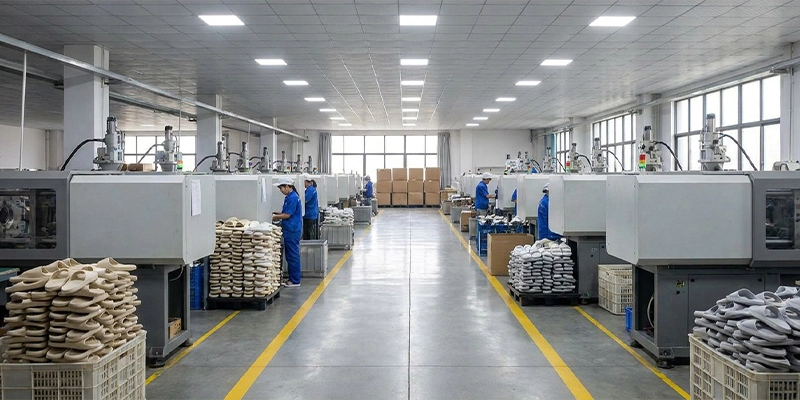
Jame He is Product Manager at Mapper Footwear, a factory-direct slipper and clog manufacturer based in Xianqiao, Jieyang, Guangdong — a global slipper production hub. Mapper Footwear runs a 2,000+ sqm facility with 60+ staff and 40+ pieces of dedicated equipment, producing EVA and PVC clogs, slides, and slippers with in-line QC at every production stage. Standard and light-custom orders start at 20 pairs; full OEM development starts at 500 pairs. Certifications include CA65 (US), EU REACH, and EU RoHS.
Follow us on Instagram/TikTok/YouTube to see our production floor before you inquire.
- Instagram: @mappershoes
- TikTok: @mappershoes
- YouTube: Mingyi Slippers
- Facebook: Mingyi Slippers
- WhatsApp: +86 183 1221 8218