By Jame He, Product Manager, Mapper Footwear | Last updated: September 2026

If you’re importing slippers into the US and you’re still handling your GCC certificate the same way you did last year, stop and check one thing first: does your certificate data get submitted electronically at the moment your shipment enters the country? As of July 8, 2026, CPSC’s eFiling requirement means most general-use consumer products – including footwear – need certificate data filed at time of entry, not just kept on file for later. Here’s the short version before we get into details.
Three things you need to know right now. First, eFiling is live and applies to most products requiring a GCC certificate (General Certificate of Conformity) or a Children’s Product Certificate (CPC) – slippers fall into this category depending on who’s wearing them. Second, CBP is currently in a “soft enforcement” window (per CSMS #69177694), which gives importers some breathing room, but that window narrows fast, and a second, stricter phase begins January 8, 2027. Third – and this is the part most buyers get wrong – adult slippers and children’s slippers are not held to the same certification standard, and if your supplier hands you the wrong type of paperwork, eFiling won’t fix that problem for you. It’ll just expose it faster.
I’ve spent six years managing production and export compliance for a slipper factory that ships to the US, EU, and UK markets. This article walks through what actually changed, where the confusion usually starts, and what you should be asking your supplier before your next PO.
Disclaimer: Regulations and enforcement timelines can shift. The information here reflects publicly available CPSC and CBP guidance as of this writing – always confirm current requirements with your customs broker or compliance counsel before making shipping decisions.
What Changed on July 8, 2026, and Why Should Slipper Buyers Care?
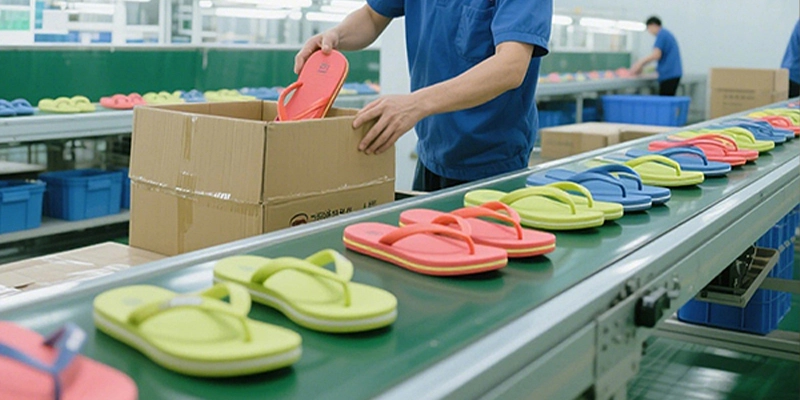
The core shift is simple: certificate submission moved from after-the-fact recordkeeping to at-the-border electronic filing. Before this rule, importers kept their GCC certificate or CPC on file and produced it if CBP or CPSC asked. Now, for most regulated consumer products, that certificate data has to be filed electronically at the time your shipment enters the US.
This matters for slipper buyers specifically because footwear sits in a category that’s easy to overlook. It’s not a toy, it’s not electronics – so a lot of importers assume it’s lower-risk and pay less attention to paperwork discipline. That assumption gets more expensive under eFiling, because a missing or mismatched certificate isn’t just a compliance gap anymore – it’s a data field that has to reconcile with your entry filing in real time. If the data doesn’t submit cleanly, your shipment can get flagged at the port, and that’s a delay most buyers aren’t budgeting for.
Do Adult Slippers Need the Same CPSC Documentation as Children’s Shoes?
No, and this is where I see the most confusion from buyers who are new to the US market. Adult slippers do not require a CPSC-accredited lab report. They’re covered under a GCC certificate (General Certificate of Conformity), which the manufacturer or importer can self-certify based on testing to the applicable standards – it doesn’t have to go through a CPSC-accepted third-party lab.
Children’s slippers are a different story entirely. Kids’ footwear requires a Children’s Product Certificate (CPC), and that certificate must be based on testing conducted by a CPSC-accepted accredited laboratory. This isn’t optional and it isn’t something a factory can self-certify around. If you’re sourcing both adult and kids’ styles from the same supplier, don’t assume one certificate covers both product lines – it doesn’t, and eFiling will surface that mismatch faster than the old system did.
We test our EVA and PVC slipper materials against FHSA requirements (16 CFR 1500) for the adult product lines we export, and any children’s styles route through accredited third-party lab testing before a CPC is issued. If your current supplier can’t clearly explain which certificate applies to which product line, that’s worth a direct conversation before your next order ships – and if adult styles are involved, make sure their GCC certificate names the correct standards, not a generic sign-off.
We saw this play out with a new buyer right after the rule took effect, when a lot of importers were still unsure how strictly it would actually be enforced. Once they found out we could provide a CPC backed by CPSC-accredited lab testing, they placed the order without hesitation. Their reasoning was straightforward: regardless of how enforcement plays out in practice, having documentation that matches the official requirement removes a risk they didn’t need to be carrying.
Is Your Current GCC Certificate Format Compatible with eFiling Submission?
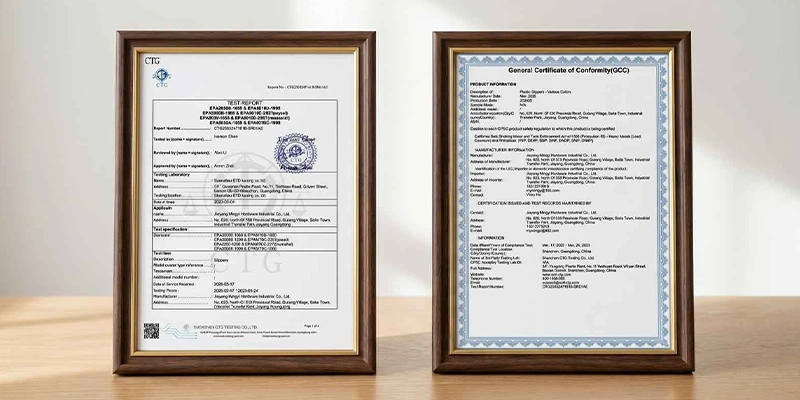
Having a GCC certificate on file isn’t the same as having one that’s structured for electronic submission. The certificate needs to include specific, verifiable fields – the product description, the applicable CPSC rule or ban it’s certifying against, the manufacturer and importer identification, and the date and location of testing. A GCC certificate written in loose prose without these fields clearly separated can cause friction when it’s time to file electronically, even if the underlying compliance is legitimate.
This is also a good moment to check your supplier’s actual test scope. A GCC certificate that just says “meets applicable US safety standards” without naming which FHSA provisions or ASTM references were tested against is a weak certificate – it might have worked under the old file-and-hold system, but it’s not the kind of documentation that holds up well once your broker starts filing it electronically.
If you’re expanding your OEM slipper line and want a supplier who documents this properly from the start, our custom slipper manufacturing process walks through how we structure certification alongside production – worth a look if you’re evaluating new suppliers for 2026 orders.
What Happens During the “Soft Enforcement” Window Before January 2027?

CBP’s current posture, per CSMS #69177694, gives importers a transition period rather than immediate hard rejection for filing gaps. In practical terms, that means the system is live, but enforcement isn’t yet at full strictness – shipments with certificate issues are more likely to get flagged for review than outright refused, for now.
That window is not permanent. The stricter phase – full pre-shipment data submission requirements – takes effect January 8, 2027. Buyers who wait until that date to sort out their GCC certificate structure are giving themselves very little runway. If your GCC certificate or CPC documentation has any gaps, the soft enforcement period is the time to fix them, not the excuse to ignore them.
What Should You Ask Your Slipper Supplier Before Placing the Next Order?

Before your next PO, ask your supplier three direct questions: What certificate type applies to this specific product line – GCC or CPC? What lab or self-certification process was used, and can they provide the underlying test data, not just the certificate summary? And has the certificate format been reviewed against current eFiling field requirements, or is it still written for the old file-and-hold system?
A supplier who answers these clearly and has the documentation ready is one you can move forward with confidently. One who hedges or can’t produce the underlying test data is a bigger liability now than it was a year ago.
At Mapper Footwear, we hold both a GCC certificate and CPC documentation depending on product line, and our EVA and PVC materials are tested to standards recognized across major US and EU markets – not just the minimum bar, but the materials buyers in both regions actually ask for. If you’re sourcing slippers for the US market and want to see how our certification and quality control process fits into your next order, that’s exactly the kind of conversation we’re set up to have.
About the author: Jame He is a Product Manager at Mapper Footwear (Jieyang, Guangdong, China), a factory-direct slipper manufacturer with 60+ staff and daily capacity of 10,000 pairs across EVA slippers, PVC flip-flops, warm slippers, and garden shoes. Mapper Footwear holds CA65, EU REACH, and EU RoHS certifications, and supports both light customization (MOQ 20 pairs) and full OEM programs (MOQ 500 pairs). Learn more at mappershoe.com.
Follow us on Instagram/TikTok/YouTube to see our production floor before you inquire.
- Instagram: @mappershoes – https://www.instagram.com/mappershoes/
- TikTok: @mappershoes – https://www.tiktok.com/@mappershoes
- YouTube: Mingyi Slippers – https://www.youtube.com/channel/UC4ID3JYne_Mj8LbCOSxDWpw
- Facebook: Mingyi Slippers – https://www.facebook.com/profile.php?id=61554075662569
- WhatsApp: +86 183 1221 8218 – https://wa.me/8618312218218