By Jame, Product Manager, Mapper Footwear — Jieyang, Guangdong | mappershoe.com
Last updated: August 2026
Regulatory and material information in this article was verified as of August 2026. Always confirm compliance requirements with your customs broker or legal counsel before importing.
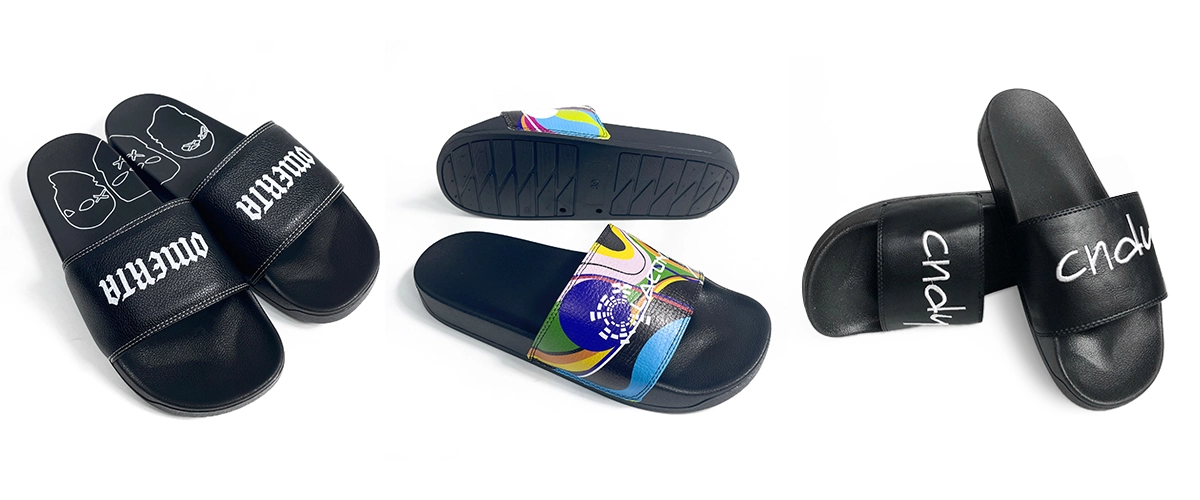
Most wholesale slipper buyers spend their time choosing between EVA and PVC. PU barely enters the conversation — and that is exactly why it represents an opportunity.
Here is the short answer: PU slippers wholesale makes sense when your customer is willing to pay for a premium feel, your retail channel rewards ingredient transparency, and your reorder volume justifies the production structure. PU upper customization is available without new tooling. PU sole construction requires a custom mold. These are two very different decisions with very different cost implications — and most buyers do not realize they are separate options until they are already mid-negotiation.
This guide separates them clearly, so you can make the right call before you send your first inquiry.
What Is PU Material and Why Does It Matter for Slipper Buyers?
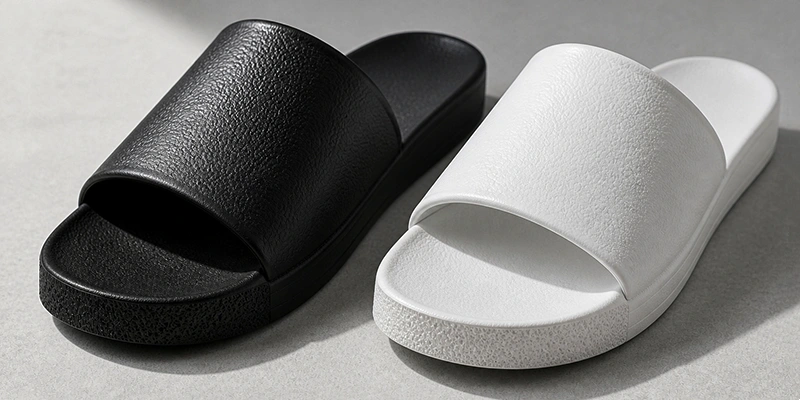
Polyurethane (PU) is a polymer material that can be engineered across a wide range of densities and surface textures. In slipper manufacturing, it appears in two distinct applications: the upper (the visible surface and strap) and the sole (the bottom unit that contacts the ground).
The critical distinction buyers need to understand: PU upper and PU sole are not the same production decision.
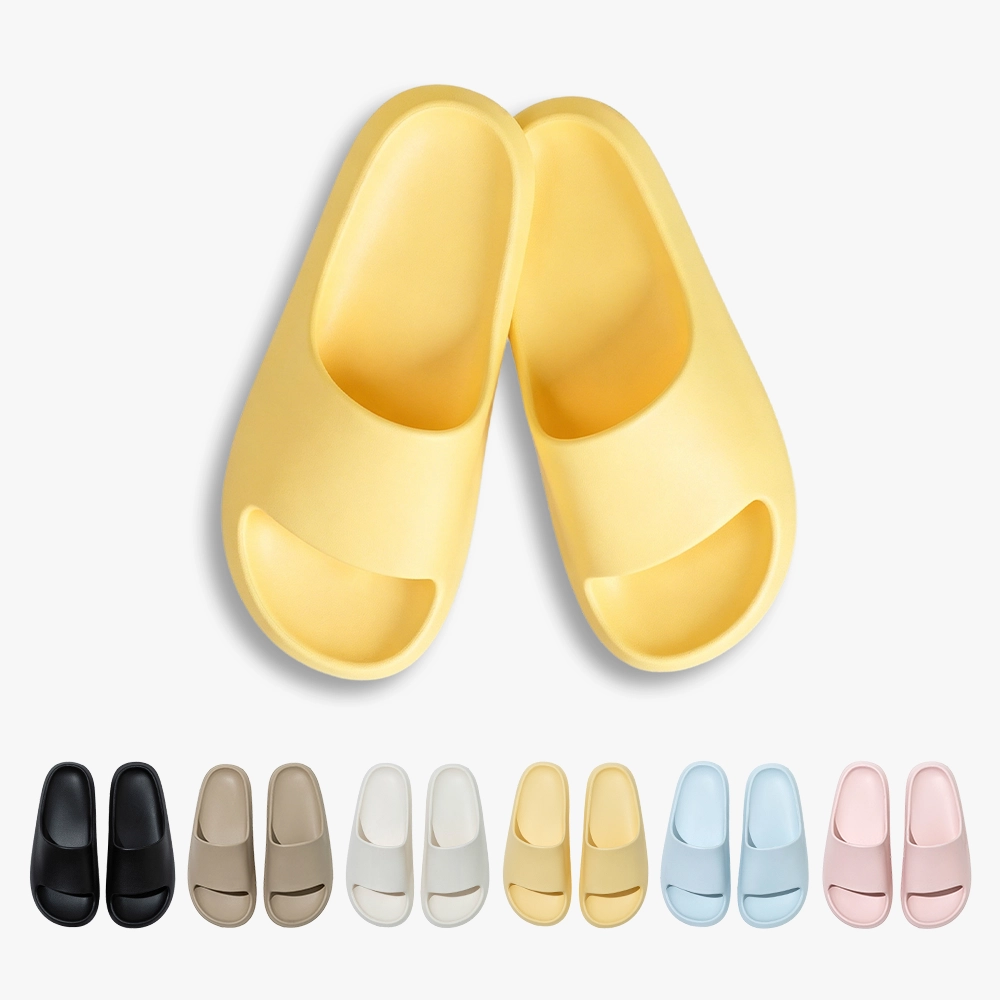
- PU upper: Can be applied to existing slipper styles as a material substitution. No new tooling required. The result is a noticeably softer, more refined surface feel — the kind that photographs well for retail and commands a price premium in boutique and DTC channels.
- PU sole: Requires a custom injection mold. The mold investment is justified when you have high reorder frequency, a brand identity built around durability, or a retail partner that specifies sole material in their vendor requirements.
This distinction alone determines whether PU is a smart sourcing decision or an expensive mistake for your current stage of business.
PU vs EVA vs PVC: The Wholesale Buyer’s Comparison
Which Slipper Material Offers the Best Value at Wholesale Scale?
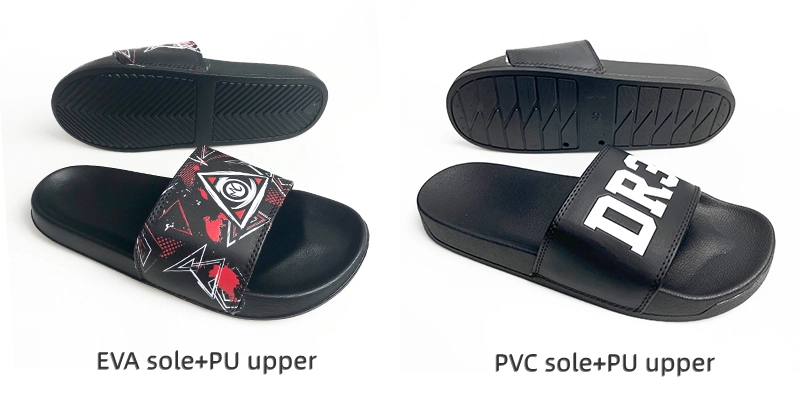
When evaluating PU slippers wholesale options, the answer depends on which part of the market you are serving. Here is the framework we use at Mapper Footwear when a buyer asks us to recommend a material:
| PVC | EVA | PU Upper | PU Sole | |
|---|---|---|---|---|
| Retail price positioning | Entry to mid | Mid | Mid to premium | Premium |
| MOQ (standard) | 20 pairs | 20 pairs | 20 pairs + processing surcharge | Custom mold required |
| Tooling cost | None (standard) | None (standard) | None | Varies by design |
| Compliance complexity | Medium (phthalate risk in some formulations) | Low | Low | Low |
| Surface feel | Firm, plastic | Soft, lightweight | Soft, leather-like | Varies |
| Best channel fit | Mass retail, hospitality | E-commerce, DTC | Boutique, branded | High-end branded |
One clarification on PVC: our standard PVC formulations use non-phthalate plasticizers and have passed EU REACH testing. For buyers targeting premium retail channels where ingredient transparency is a non-negotiable requirement, PU upper options provide an additional layer of assurance — not because PVC is unsafe at our production standard, but because some retail buyers specify PU in their vendor briefs regardless.
When Does PU Upper Make Sense for Your Business?
What Are the Advantages of PU Upper Slippers for Wholesale Buyers?
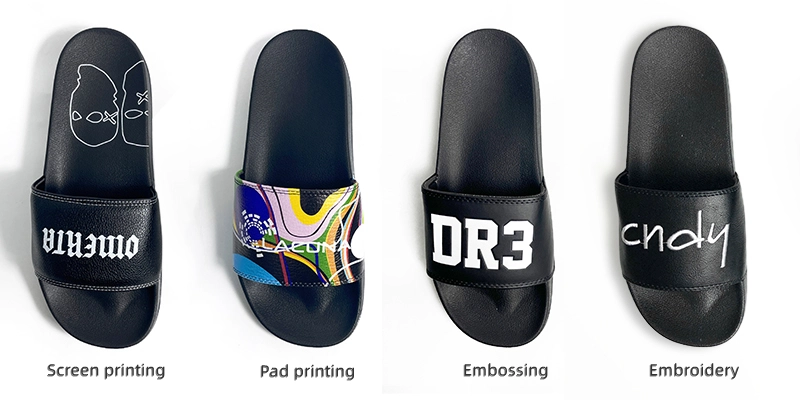
For buyers exploring PU slippers wholesale for the first time, PU upper is the entry point into premium slipper sourcing — and it does not require the tooling investment that most buyers assume.
What you can do with PU upper on existing styles:
- Logo embossing: Pressed directly into the PU surface, clean and durable
- Printed patterns: Heat transfer or screen printing onto PU surface
- Color matching: PU takes color well and maintains consistency across batches
- Texture specification: Smooth, matte, or lightly grained finishes available
One thing to note: specifying PU upper material without any customization — for example, if you want a standard style with PU upper paired with an EVA or PVC sole — will incur a processing surcharge. This is because PU upper requires separate material sourcing outside our standard production run. If you are going to pay the surcharge, our recommendation is to add at least a logo or pattern, which gives your product a genuine point of difference in the market and makes the cost increment worthwhile.
The business case is straightforward. A PU upper slipper retails for 20–40% more than an equivalent EVA style in most boutique and DTC channels, while the factory cost difference is typically 15–25%. The margin expansion on PU is real — but only if your channel can support the retail price.
When Does PU Sole Make Sense?
When Should a Wholesale Buyer Invest in a Custom PU Sole Mold?
PU soles offer genuine performance advantages: higher abrasion resistance, better energy return than standard EVA, and a more substantial feel underfoot that premium consumers associate with quality. The trade-off is tooling cost and the commitment it implies.
Before recommending a PU sole to any buyer, we ask four questions:
1. Is your projected annual volume above 2,000 pairs for this style?
Below that threshold, the mold cost is hard to amortize. You are better served by an EVA sole on an existing mold.
2. Are you planning at least 2–3 reorder cycles?
A single production run rarely justifies custom tooling. PU sole investment makes sense when you are building a repeatable product.
3. Does your retail positioning require sole specification?
Some retail buyers — particularly in pharmacy, orthopedic, or premium hospitality channels — specify sole material in their vendor contracts. If your buyer does, the decision is made for you.
4. Does the design require a shape that does not exist in our current mold library?
If you can work within an existing EVA mold shape and substitute PU compound, the cost is lower. Custom geometry adds mold development time and cost.
If you answered yes to at least two of these, PU sole is worth the conversation. If not, EVA sole with PU upper is almost always the smarter entry point.
PU Slippers and Compliance: What EU and US Buyers Need to Know
Are PU Slippers Compliant for EU and US Retail Markets?
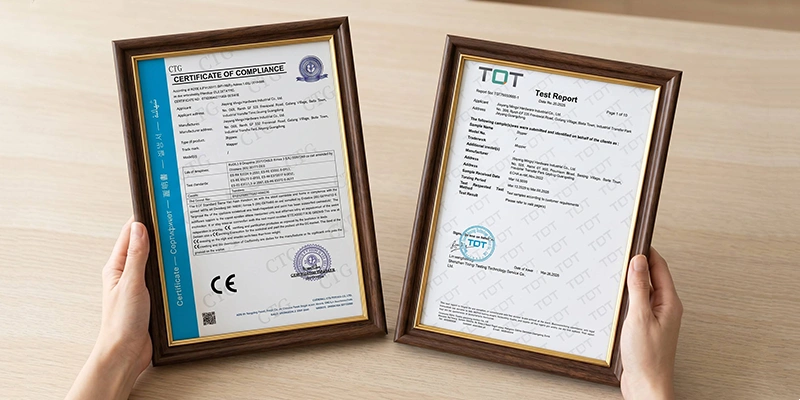
PU materials present a lower compliance risk profile than some PVC formulations. For buyers sourcing into regulated markets:
EU market (REACH): PU does not carry the phthalate-related compliance burden that applies to certain PVC plasticizer formulations. Our PU materials have been tested against the current EU REACH SVHC candidate list (251 substances as of November 2025). Test reports are available on request.
US market (CA65 / Prop 65): Our standard PU upper materials have been tested against California Proposition 65 restricted substance requirements. For buyers selling into California retail — online or physical — CA65 documentation is essential and we can provide it.
For buyers sourcing both PU upper and EVA or PVC sole: compliance testing covers the full product, not just the upper. Ensure your test report references both components. We coordinate this as part of our standard documentation package for export orders.
All compliance data referenced here reflects testing completed as of Q2 2026. Requirements are subject to regulatory updates — verify current standards with your customs broker before shipment.
Customization Options: What You Can Actually Do with PU
What Customization Is Available for PU Slipper Wholesale Orders?
| Customization Type | PU Upper | PU Sole |
|---|---|---|
| Logo embossing | Yes — no tooling required | Yes — included in mold design |
| Printed pattern | Yes — heat transfer or screen print | Limited |
| Color matching (Pantone) | Yes | Yes |
| Custom shape/silhouette | No — uses existing mold | Yes — requires new mold |
| Texture specification | Yes — smooth, matte, grained | Limited |
| MOQ | 20 pairs + processing surcharge | Custom mold minimum applies |
The most cost-efficient entry point for buyers new to PU is: existing EVA mold + PU upper + logo embossing. You get the premium surface, the brand presence, and no tooling cost. Most boutique buyers start here before deciding whether the volume justifies a full PU sole investment.
A Buyer’s Story: When PU Upper Changed the Conversation
A buyer from France came to us after two seasons selling EVA slides under a house brand. The product sold fine but was consistently underpriced by competitors. Their retail partner was pushing for something that “felt different in the hand.”
We recommended switching the upper material from fabric to PU on their existing bestselling mold — with their logo embossed and a new Pantone color. No new tooling. The first batch was 80 pairs across four colors.
Their retail partner accepted the new version at a 20% higher wholesale price. The buyer’s margin per pair improved by 28% despite the higher material cost. The “different feel” their retail partner wanted was not a new design — it was a material upgrade that cost less than they expected.
That is the PU opportunity in practice.
Q&A — What Wholesale Buyers Ask Before Their First PU Order
Can I combine a PU upper with an EVA sole?
Yes — and this is our most recommended starting configuration for buyers new to PU. You get the premium surface feel without tooling investment. A processing surcharge applies if no other customization is added; we recommend adding at least a logo to maximize the value of that surcharge.
What is the MOQ for PU upper slipper styles?
Our standard MOQ is 20 pairs. For PU upper without other customization, a processing surcharge applies. For PU upper with logo or pattern customization, the surcharge is typically absorbed into the customization setup cost. Contact us to confirm based on your specific style selection.
Is PU more expensive than EVA to source wholesale?
PU upper adds a cost increment over standard EVA upper — typically in the range of 15–25% at the factory level, depending on finish and order volume. PU sole requires mold investment on top of unit cost. The relevant question is not whether PU costs more, but whether your retail channel can support the price premium it enables — which for most boutique and DTC buyers, it can.
How long does PU upper sampling take?
For existing mold styles with PU upper substitution and logo embossing: 5–7 business days. For new PU sole mold development: 20–30 days for the initial sample. We confirm timelines at the inquiry stage.
Ready to discuss your PU slippers wholesale program?
PU is not the right material for every buyer or every channel. But for buyers who are ready to move up the value chain — and whose retail partners reward ingredient quality and surface feel — it is one of the clearest margin expansion opportunities in wholesale footwear right now.
- Visit mappershoe.com — browse our standard catalog and OEM capability, including PU upper options.
- Send your inquiry with your target channel, retail price point, and whether you are considering PU upper, PU sole, or both. We respond within 1 business day.
- Request samples — PU upper samples on existing styles are available within 5–7 business days.
Follow us on Instagram · TikTok · YouTube to see our production floor and material options firsthand. For urgent inquiries: WhatsApp +86 183 1221 8218
About the Author
Jame is a Product Manager at Mapper Footwear, an integrated manufacturer and trading company in Xianqiao, Jieyang. 2,000 sqm facility · 60+ staff · 10,000 pairs/day capacity · 40+ specialist machines. Products span EVA slippers, PVC flip-flops, PU upper styles, warm slippers, and garden shoes — certified to CA65, EU REACH, and RoHS. GCC and CPC available for US-bound shipments. Six years managing wholesale export for buyers across Europe, North America, and Korea.
Follow Mapper Footwear:
Instagram · TikTok · YouTube · Facebook · WhatsApp +86 183 1221 8218 · mappershoe.com