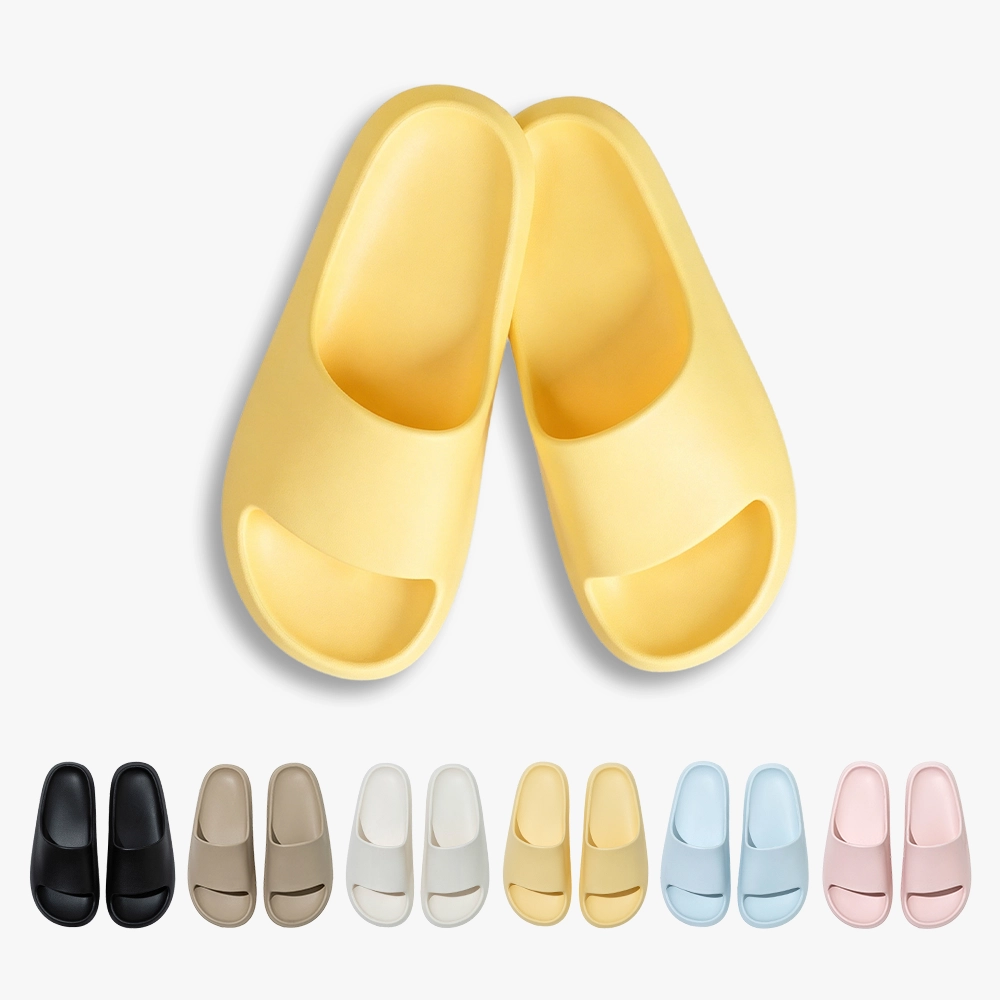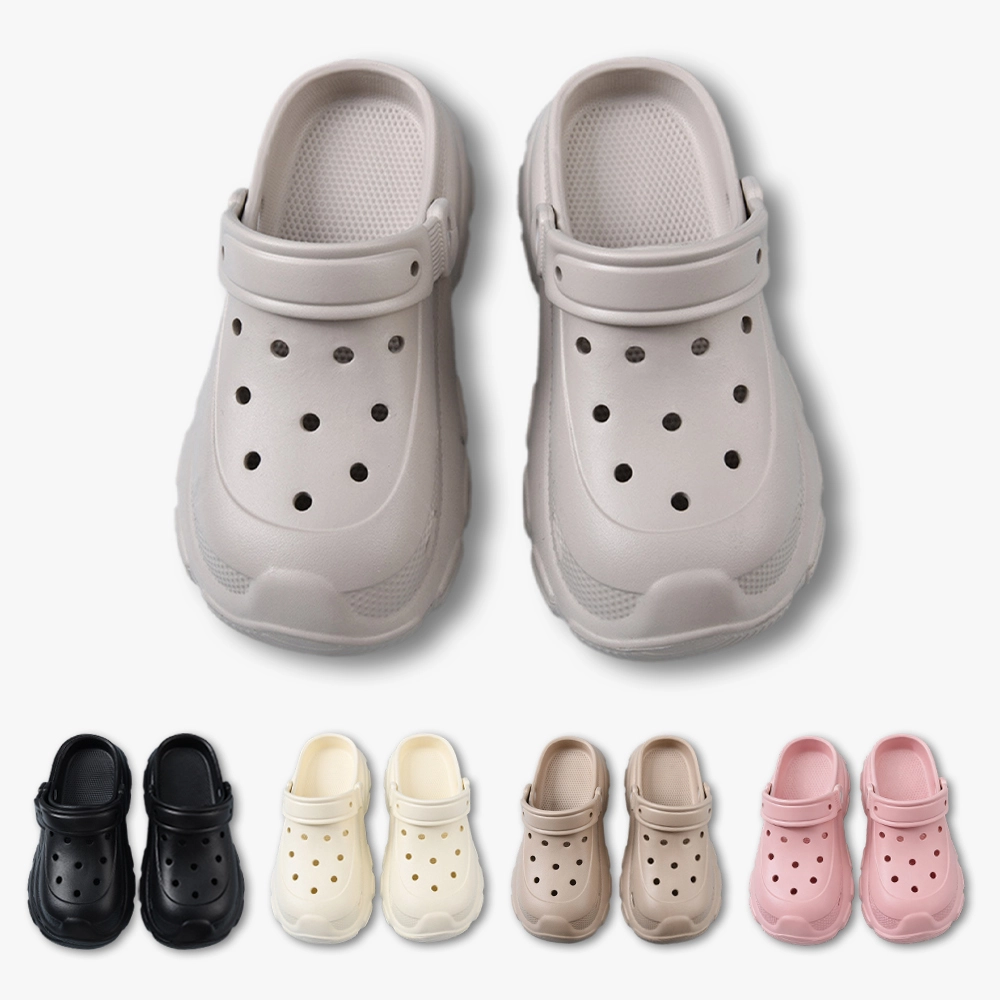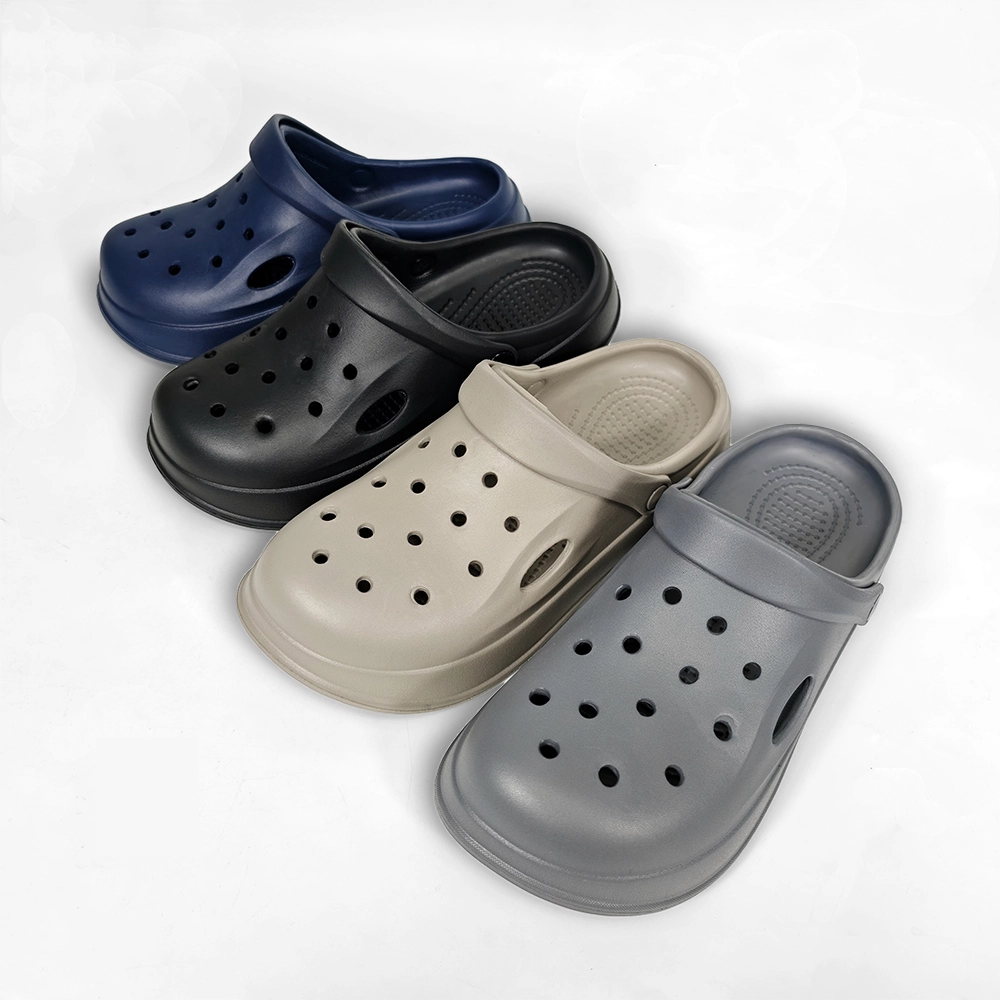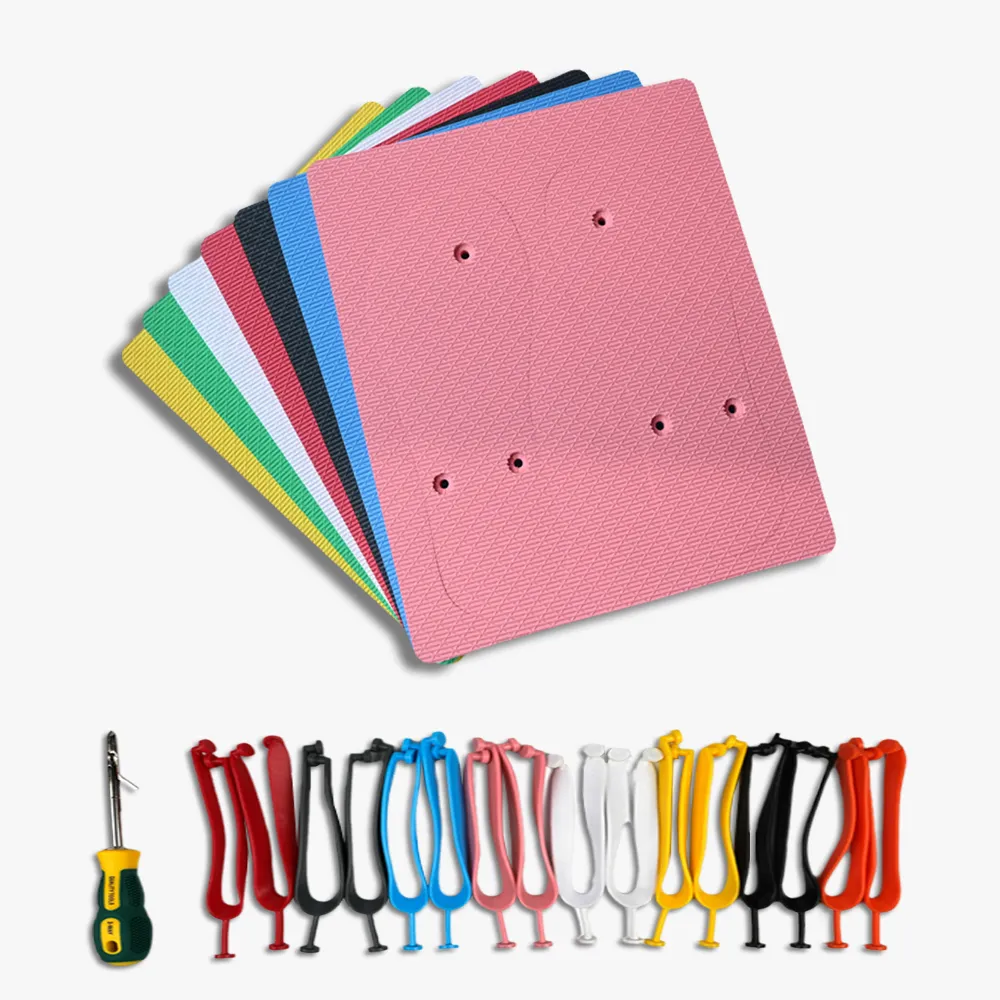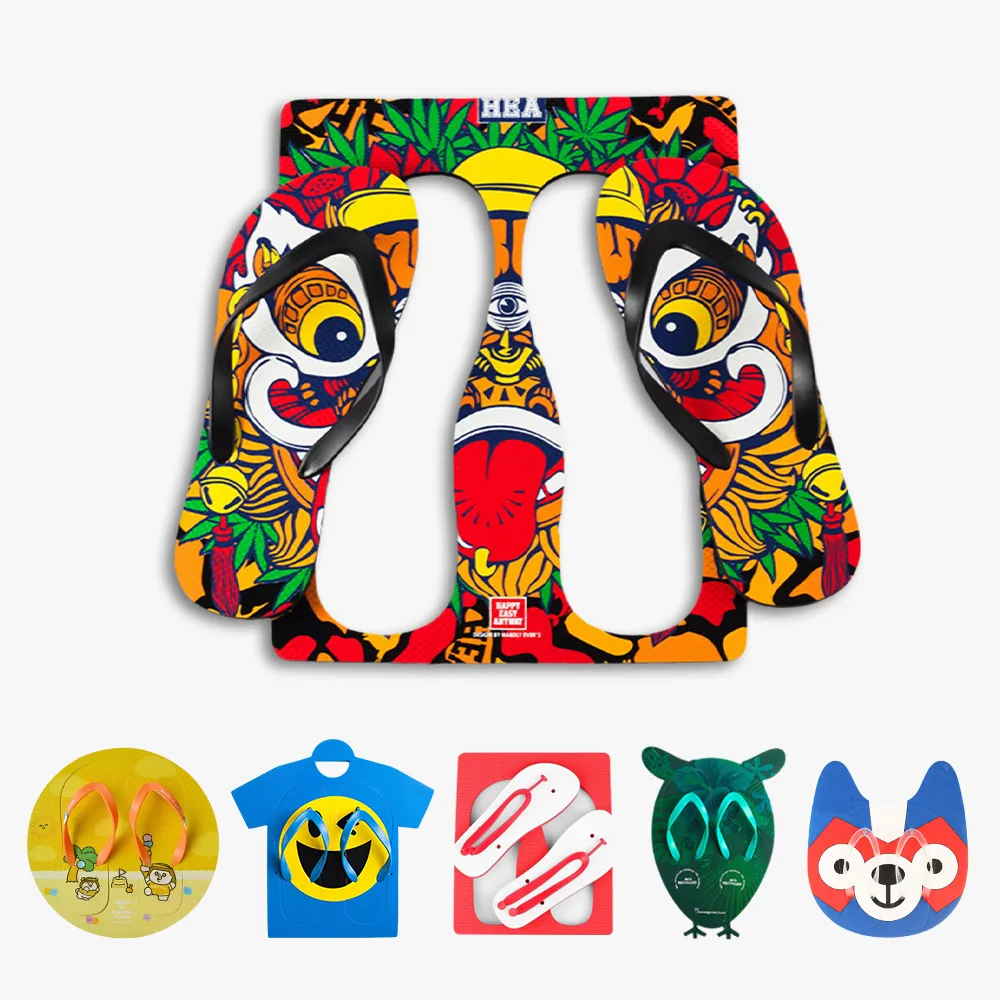
Here is the bottom line: there is no single best slipper material — the right choice depends entirely on your retail channel, your customer’s use case, and your margin expectations.
PVC is the workhorse of the wholesale market: low cost, strong anti-slip, and easy to customize at scale. EVA is the comfort play: lightweight, cushioned, and well-positioned for DTC brands and e-commerce. PU is the premium tier: the highest surface quality and durability, suited to buyers whose retail customers associate product feel with brand value.
Most sourcing mistakes happen when buyers choose material based on unit price alone. This guide gives you the factory-floor view of all three — what each material actually delivers, where it falls short, and which wholesale channels it fits best, to help you make a wise choice.
PVC Slippers
PVC leads on anti-slip — and it is not close.
PVC’s surface friction properties make it the default choice for wet environments: hotel bathrooms, pool surrounds, gym changing rooms, and spa facilities. If your buyer is sourcing for hospitality or any application where slip liability matters, PVC is the defensible specification.
EVA and PU both offer general-level grip that is adequate for dry indoor use, but neither performs as reliably as PVC on wet tile or smooth flooring. If your product will carry any kind of “anti-slip” claim in marketing, the sole material and tread pattern need to be specified and tested — not assumed.
PVC Slippers — Pros and Cons
Advantages:
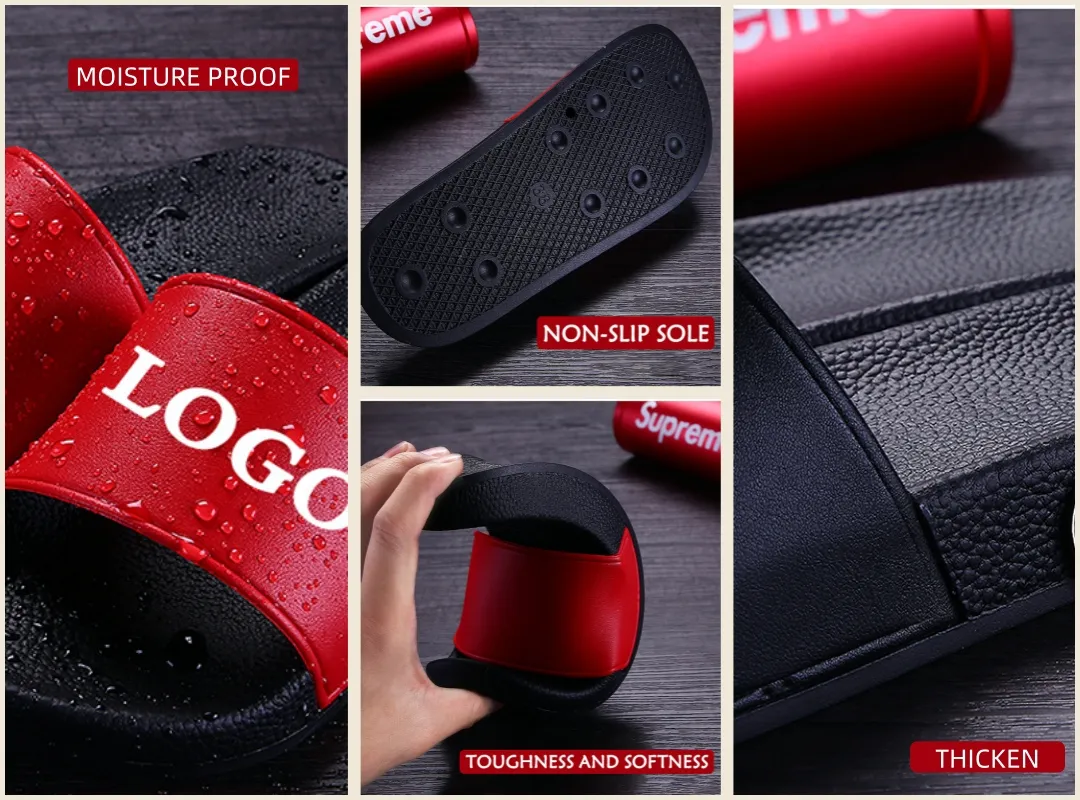
- Strong anti-slip performance — best of the three for wet environments
- Excellent plasticity — takes complex shapes, patterns, and mold designs well
- Cost-efficient — lowest raw material and production cost of the three
- Easy to clean — smooth surface resists dust and dirt adhesion
- Flexible customization — colors, logos, and embossing are straightforward
Disadvantages:
- Durability limitations — PVC uppers and soles are prone to cracking under high-frequency use or UV exposure
- Compliance considerations — some PVC formulations use phthalate plasticizers that require attention for EU REACH and US Prop 65 compliance. Our standard PVC uses non-phthalate compounds and has passed REACH testing.
- Breathability — limited airflow compared to EVA
Best wholesale fit: mass retail, promotional giveaways, hotel amenities, bathroom and poolside applications
EVA Slippers
EVA wins on comfort and weight — which is why it dominates the DTC and e-commerce channel.
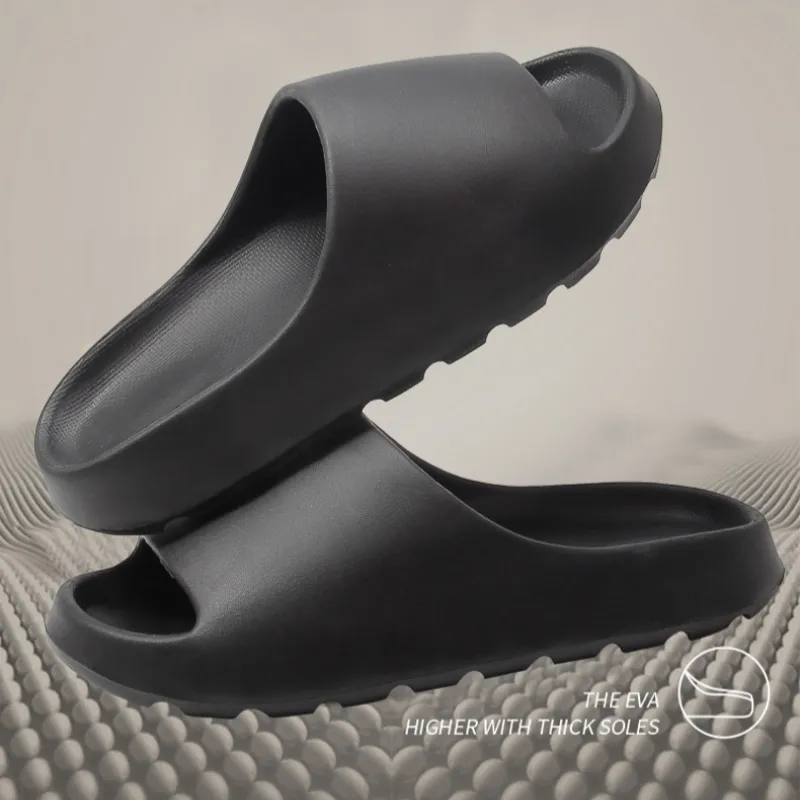
The combination of cushioning, rebound, and low weight makes EVA the preferred material for buyers whose end customers wear slippers for extended periods: home use, casual indoor wear, beach and outdoor leisure. Positive consumer reviews for EVA slides consistently highlight the “lightweight” and “comfortable” experience — two attributes that drive repeat purchase and low return rates.
EVA Slippers — Pros and Cons
Advantages:
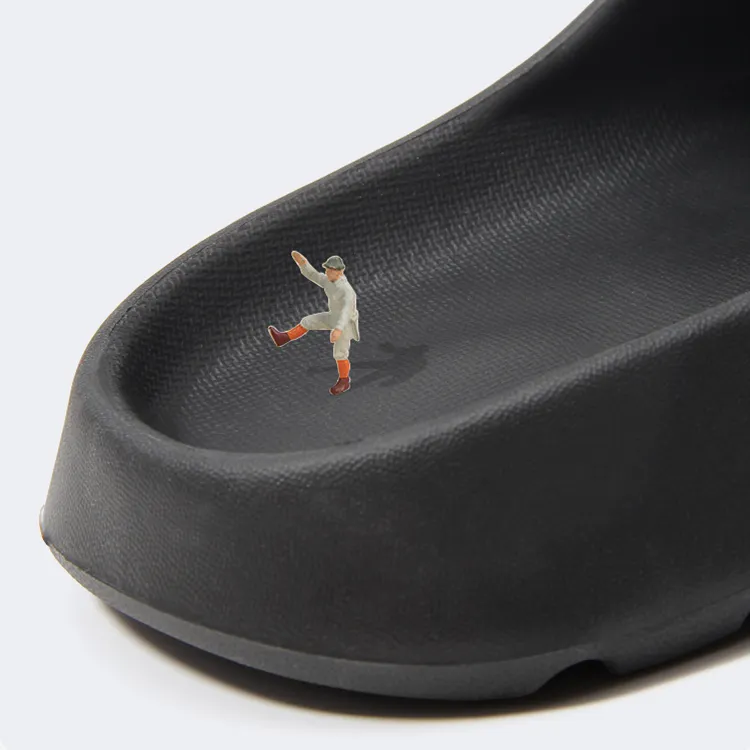
- Superior cushioning and shock absorption — reduces foot fatigue during extended wear
- Lightweight — significantly lighter than rubber or standard PVC, improving wearability
- Good resilience — returns to shape after compression, maintaining comfort across the product’s life
- Compliance-friendly — EVA formulations typically present lower risk under EU REACH and CA65 testing
- Strong customization range — color matching, embossing, and logo options are well-established
Disadvantages:
- Lower wet-surface grip than PVC — not suitable for applications where anti-slip performance is a safety requirement
- Higher unit cost than PVC — the material premium is real, though usually offset by higher retail price potential
- Cannot be interlocked for shipping — unlike PVC styles, EVA slippers cannot be alternated sole-to-upper in carton packing
Best wholesale fit: DTC brands, e-commerce, home and leisure retail, beach and resort
PU Slippers.
PU makes sense when surface feel is a brand differentiator — and when your retail channel rewards it.
PU is not a volume material. At Mapper Footwear, we offer PU upper options on existing EVA mold styles — no new tooling required — which is the most cost-efficient way for buyers to access PU’s premium surface quality without a full OEM investment. PU sole construction requires a custom mold and is suited to buyers with high reorder confidence and a retail positioning that justifies the unit cost.
PU Slippers — Pros and Cons
Advantages:
- Premium surface feel — soft, smooth contact with skin, no scratching sensation
- Best durability of the three — wear-resistant, resistant to cracking under normal use conditions
- Elevated visual presence — PU carries a leather-adjacent aesthetic that reads as premium in boutique and branded retail
- Logo embossing and pattern printing available on PU uppers without new tooling
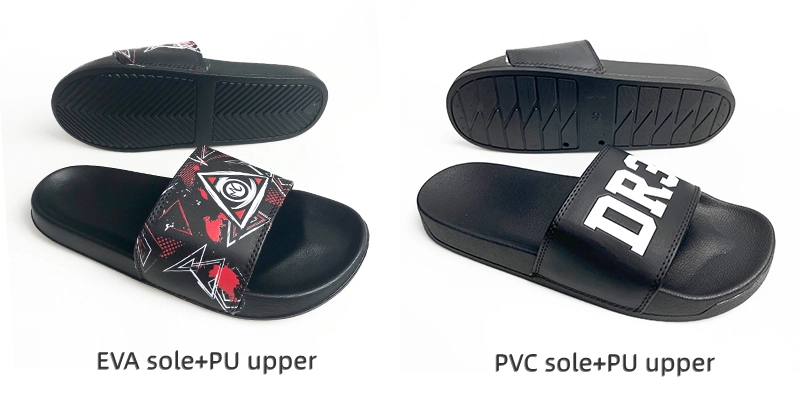
Disadvantages:
- Poor breathability — closed-cell structure limits airflow, not suited for warm climates or high-activity use
- Highest unit cost — PU upper adds a cost increment over standard materials; PU sole requires mold investment
- Processing surcharge applies if PU upper is specified without customization
- Not ideal for price-sensitive wholesale channels
Best wholesale fit: boutique retail, branded DTC, high-end hospitality, private label with premium positioning
Summary of the Comparison of the Three Materials
| Item | PVC slippers | EVA slippers | PU slippers |
| Softness | Medium | High | High |
| Anti-slip | Strong | General | General |
| Breathability | General | Good | Poor |
| Durability | General | Good | Best |
| Price | Low | Medium | High |
| Suitable for people | Commercial, promotional | Home, leisure,brand customization | High-end customers, brand customization |
What is the best material for slippers in a hotel or hospitality setting?
PVC. The anti-slip performance and cost efficiency make it the standard specification for hotel bathroom slippers, spa facilities, and poolside use. The low unit cost also supports high-volume disposable or semi-disposable hotel amenity programs.
What is the best slipper material for e-commerce and DTC brands?
EVA. The lightweight comfort profile generates the kind of consumer reviews (“so light,” “really comfortable”) that drive conversion and reduce returns. EVA also photographs well and customizes cleanly for branded packaging.
When should I consider PU for wholesale?
When your retail channel rewards product feel over price — boutique stores, wellness brands, or premium private label programs. Start with PU upper on an EVA mold base: no tooling cost, immediate access to PU’s surface quality, and a clear margin expansion opportunity if your channel supports a higher retail price.
Does material choice affect compliance requirements?
Yes. PVC requires attention to plasticizer type — some formulations use phthalates that trigger EU REACH SVHC and US Prop 65 concerns. Our standard PVC uses non-phthalate compounds. EVA and PU present lower compliance risk profiles. For regulated retail channels in the EU or US, request test reports from your supplier before confirming bulk orders. See our full compliance guide: Slipper Import Certifications by Market.
Ready to Source? Here Is What to Do Next
Whether you are sourcing PVC for a hotel program, EVA for an e-commerce launch, or exploring PU for a premium private label line — the starting point is the same: a clear product brief and a factory that can respond to it honestly.
- Visit mappershoe.com — browse our standard catalog across PVC, EVA, and PU upper options.
- Send your inquiry — include your target channel, retail price point, and material preference (or ask us to recommend). We respond within 1 business day.
- Request samples — standard styles ship free (freight only). Light custom samples: starting from USD 40.
Follow us to see our materials, production floor, and finished products in action: Instagram · TikTok · YouTube
For urgent inquiries: WhatsApp +86 183 1221 8218
About the Author
Jame is a Product Manager at Mapper Footwear, an integrated manufacturer and trading company in Xianqiao, Jieyang. 2,000 sqm facility · 60+ staff · 10,000 pairs/day capacity. Products span EVA slippers, PVC flip-flops, PU upper styles, warm slippers, and garden shoes — certified to CA65, EU REACH, and RoHS. GCC and CPC available for US-bound shipments. Six years managing wholesale export for buyers across Europe, North America, and Korea.
Follow Mapper Footwear:
Instagram · TikTok · YouTube · Facebook · WhatsApp +86 183 1221 8218 · mappershoe.com
Related reading: